
Do Not Let the First Available Distraction Choose What Comes Next
Explore an unfilled interval as a space for deliberate choice, distinguishing boredom from persistent loss of interest and creativity claims.

IN THIS ARTICLE
An empty interval quickly acquires an ownerBoredom does not automatically mean something is wrongLeave the interval open long enough to ask a questionDo not promise that boredom manufactures creativityA concrete selection is more useful than an unlimited aspirationDistinguish rest from the obligation to extract an outputPrepare alternatives for the moment when choice is difficultJudge the practice by the pattern it makes possibleAn empty interval quickly acquires an owner
You finish a task and reach for the phone before deciding what the next part of the day is for. The action is so ordinary that it may not feel like a decision. Yet something has been selected: an incoming feed will now provide the next question, image and emotional tempo. In the CyGuru perspective, this small transition is worth studying because agency is often transferred through repetition rather than a dramatic surrender. The unfilled minute becomes uncomfortable, and the first available stimulation inherits it. That does not make entertainment wrong. It makes the distinction between chosen enjoyment and automatic occupation relevant to the life your attention is building.
Boredom does not automatically mean something is wrong
Some intervals lack a clear task or immediate reward. You may feel restless, underoccupied or uncertain about what would be worthwhile. These experiences do not establish a diagnosis, a biological deficiency or a failure of purpose. At the same time, persistent loss of interest, distress or difficulty functioning should not be romanticized as the necessary beginning of creativity. NIMH advises attending to mental health and seeking help when needed. An editorial framework cannot determine which experience a particular reader is having. Keep the observation proportionate: what does this brief interval feel like, what usually follows it and does the pattern fit the way you want to spend your time?
Leave the interval open long enough to ask a question
You might begin with a modest pause after completing one task. Put the device down and ask what kind of activity would serve the next hour. Perhaps you need rest, a necessary administrative action, a conversation or work that has been postponed. The pause has no value simply because it is uncomfortable. Its value is whether it permits a choice that automatic occupation would have displaced. Do not make yourself endure a long empty period as proof of discipline. The aim is a usable distinction between a cue that arrives from outside and a decision that reflects your current situation, responsibilities and interests.
Do not promise that boredom manufactures creativity
A quieter setting may give you room to notice an idea, but an empty calendar does not guarantee useful work. Creativity still depends on knowledge, practice, materials, feedback and many other conditions. The doctrine’s interpretive contribution is narrower: if every interval is immediately occupied by incoming content, some questions receive little sustained attention. You can examine that possibility without turning it into a universal scientific law. A person may also use music, conversation or a busy setting productively. The relevant test is the quality of engagement and output, not whether the environment resembles an idealized image of a silent thinker waiting for inspiration to arrive.
A concrete selection is more useful than an unlimited aspiration
Imagine an illustrator finishing paid work and habitually spending the evening browsing other people’s portfolios. The activity provides inspiration but also consumes the time intended for a personal series. A practical experiment might reserve a short interval to choose one image to develop, identify the material needed and begin a small study. Browsing can remain part of the evening with a defined purpose. The experiment does not require rejecting every external influence. It asks whether the illustrator can convert an open interval into contact with their own question before the feed supplies another comparison. The result may be an imperfect sketch rather than an impressive idea. That sketch can still provide more useful evidence about the intended work than another hour of feeling inspired without making a choice.
Distinguish rest from the obligation to extract an output
An unfilled interval does not always need to become productive. You may choose to sit, enjoy a view or listen without planning a result. The important word is choose. If every pause must justify itself through creativity or self-improvement, you have placed a new performance requirement where you intended to recover agency. Notice whether the proposed practice creates more room or another way to criticize your ordinary humanity. Rest and deliberate work can both belong to a life with direction. The distinction is between a considered allocation and a pattern that leaves you repeatedly surprised by where the time went, despite claiming you had wanted something else.
Prepare alternatives for the moment when choice is difficult
When tired or overstimulated, generating an entirely new activity may require more effort than you want to invest. Keep a small set of accessible options: a book already chosen, materials for a personal project, a simple household task or an appropriate leisure activity. The options should match your circumstances rather than someone else’s ideal routine. This is an environmental aid, not a treatment claim. It reduces the gap between recognizing a habitual response and having something workable to do instead. If the alternatives are all demanding projects while the phone offers effortless novelty, the environment continues to favor the response you are trying to reconsider.
Judge the practice by the pattern it makes possible
After several days, ask whether more of your time went toward activities you actually value. Did you enjoy leisure more deliberately? Did a postponed question receive attention? Did the pause become another rigid rule that created frustration without benefit? Use these observations to adapt the practice. In a Human Codes reading, attention is not valuable only when it produces work or confirms a disciplined identity. It is part of your ability to participate in your own life. An empty interval can remain small and ordinary while still containing a meaningful decision. The first available distraction does not need to be the default author of what happens next.
Keep one example of a deliberate selection and one example of automatic occupation. Compare what preceded each, what options were available and how you felt afterward. Avoid assuming the deliberate choice was superior merely because you intended it. It may reveal an unrealistic plan. The comparison is useful when it produces a better next choice, rather than a story in which attention becomes another possession you can accuse yourself of wasting.
Continue the reading path
- LAW OF DISTRACTION: What does distraction allow you to avoid deciding?
- The Code Of Purpose: What responsibility would still matter to you without public recognition?
Sources and further reading
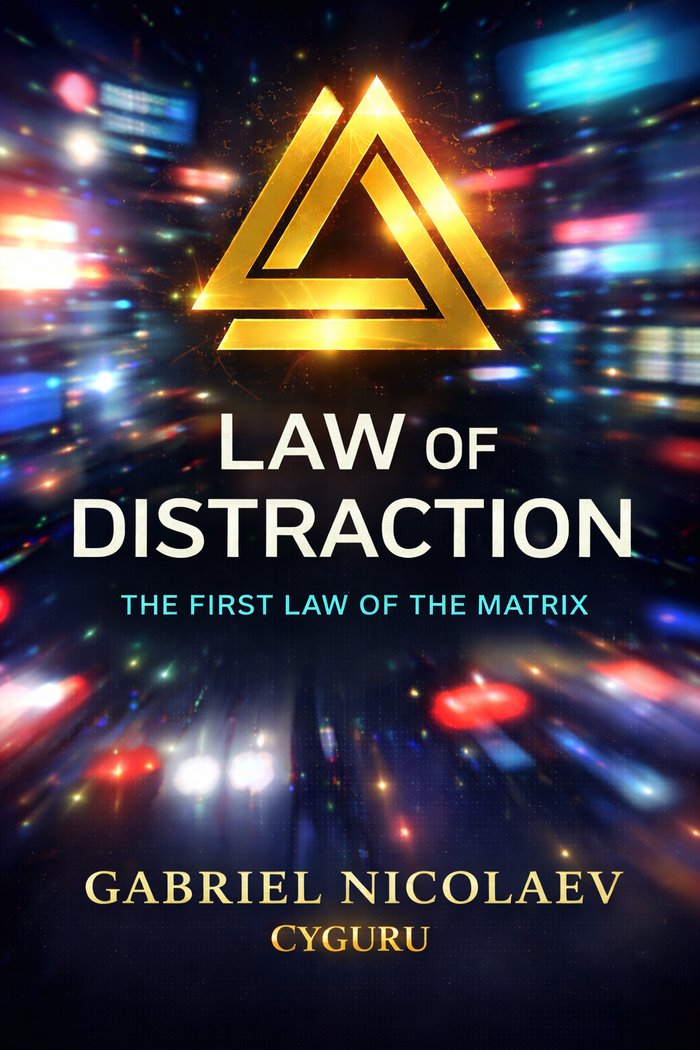
LAW OF DISTRACTION
Distraction does more than interrupt a task; it can determine which goals receive enough sustained attention to become real. This title invites a look at the incentives and habits that repeatedly pull effort away from chosen priorities.
View & order on CYGURU.com ↗