
Five Analysts Disagree. You Still Need One Clear Question.
Build a trading information routine around source quality, time horizon and answerable questions, while allowing market uncertainty to remain visible.

IN THIS ARTICLE
The next opinion promises to finish the uncertaintyAsk whether the analysts are answering the same questionGive primary information a different place from interpretationInvestigate the source without demanding a villainConsider the trader who gathers opinions after choosing a sideChoose a review rhythm that fits the actual taskDocument what would change your viewLet disagreement remain usable informationThe next opinion promises to finish the uncertainty
You read an optimistic analysis of gold, then a warning of a sharp decline. A third commentator says the disagreement itself proves an exceptional opportunity. You keep searching, hoping one more explanation will turn an uncertain market into an obvious decision. Instead, the number of voices grows while your own question becomes harder to identify. In the CyGuru reading, the issue is not that disagreement should disappear. It is that information may be serving a different purpose from the one you claim. Are you investigating a defined question, or seeking a voice that makes uncertainty feel temporarily resolved? A useful information routine begins by recognizing that an informed market decision can remain uncertain even after careful research and that more commentary does not necessarily settle the remaining risk.
Ask whether the analysts are answering the same question
A long-term discussion of reserve demand and a short-term discussion of an upcoming data release may sound contradictory while examining different horizons. One speaker may discuss physical ownership; another may discuss a leveraged product. Separate the instrument, timeframe and type of claim before comparing conclusions. Is the statement a reported fact, a conditional scenario, an estimate or a promotional forecast? A commentator who says a particular development could support demand has not necessarily predicted tomorrow’s price. Accurate distinctions do not prove either analysis correct. They help you avoid treating every difference as a contest in which somebody must be declared trustworthy and everyone else dismissed. Compare the questions and assumptions first, then assess whether the disagreement is substantive enough to matter to the decision you are actually considering.
Give primary information a different place from interpretation
An official announcement, a contract specification and an analyst’s explanation have different roles. The first may establish what was announced; the second describes the product; the third proposes what the information means. Keep a record of which level supports each statement you use. An official source can still contain estimates or later revisions, so read its definitions and dates. Commentary can provide useful context while remaining an argument to examine. The practical objective is traceability: could you return to the underlying material if the interpretation were challenged? Do not treat repeated publication of the same claim as independent confirmation unless the outlets supply independent evidence. Familiarity can grow through repetition without the factual basis becoming any stronger than it was in the first account you read.
Investigate the source without demanding a villain
The CFTC warns about social-media schemes involving unregistered brokers, fabricated testimonials and purported trading experts, including promotions aimed at people interested in precious metals. This official warning supports checking sources and claims; it does not establish that every disagreement, educator or online analyst is fraudulent. Ask what can be verified about the source, what interests are disclosed and how the claim could be tested. Avoid granting credibility solely through luxurious imagery, an impressive audience or an emphatic prediction. Also avoid assuming that skepticism alone makes you informed. Rejecting every voice leaves the same analytical work unfinished. The useful position is neither automatic trust nor automatic accusation. It is an inquiry proportionate to the authority you are being asked to grant and the financial consequence of relying on it.
Consider the trader who gathers opinions after choosing a side
Imagine a trader who already wants a particular market outcome. They describe their next hour online as research, but save only explanations that agree with that preference. Opposing views are dismissed because the speaker sounds nervous or insufficiently experienced. A more useful record would list the original question, the evidence found and the strongest unresolved objection. The example is hypothetical; it is not a diagnosis of the reader or a recommendation to take the opposite position. Its purpose is to expose a difference between collecting information and collecting permission. If the intended action cannot survive a fair description of contrary evidence, another reassuring video is unlikely to make the underlying reasoning more complete. The question may require further work or no immediate financial action at all.
Choose a review rhythm that fits the actual task
Not every reader needs a continuous stream of market commentary. Identify what information your educational or analytical task requires and when that information becomes available. A scheduled review can be more usable than opening multiple feeds whenever discomfort appears. This is a practical arrangement, not a scientifically validated schedule or a rule that ignores genuine developments. If new material is relevant, examine it. If the same opinion is merely repeated, distinguish the repetition from a new fact. Keep room to stop reading when the defined question has been addressed as far as the available evidence permits. Trading still involves risk, and a quieter information environment cannot guarantee a better outcome. Its value is making the reasoning easier to inspect rather than promising that reduced noise creates profitable certainty.
Document what would change your view
Before seeking another opinion, write what information could materially alter your present understanding. This may concern a factual correction, a changed assumption or evidence that a source was unreliable. The exercise is not a commitment to defend your original conclusion. It gives revision a visible basis. If no conceivable information would matter, you may be protecting a preferred story rather than conducting an inquiry. Conversely, if every confident sentence overturns the previous conclusion, the evaluation standard may be missing. CyGuru’s nervous-system doctrine supplies an interpretive language for noticing the urgency to borrow certainty. It does not prove a neurological cause for information seeking. Keep the observation attached to conduct you can examine: what you read, what you record and which reasons actually change the decision.
Let disagreement remain usable information
At the end of a review, you may understand why sources differ without discovering which outcome will occur. That is a legitimate result. Record the competing assumptions, the evidence you could verify and the uncertainty that remains. Do not require the last commentator you heard to close the matter simply because continuing to hold it open feels uncomfortable. You can choose additional study, seek qualified advice where appropriate or leave a financial decision unmade. An information diet is useful when it supports judgment instead of supplying a permanent audience for your preferred conclusion. The Human Codes question is whether your attention remains available to the task. Five analysts can disagree while you retain one clear account of what you know, what you infer and what you are not in a position to claim.
Continue the reading path
- THE GOLD TRADER’S CODE: Which trading rules can you describe without referring to the result?
- Before You Click — Gold Trading Psychology & Nervous System Regulation: What would make you leave a convincing setup untouched?
Sources and further reading
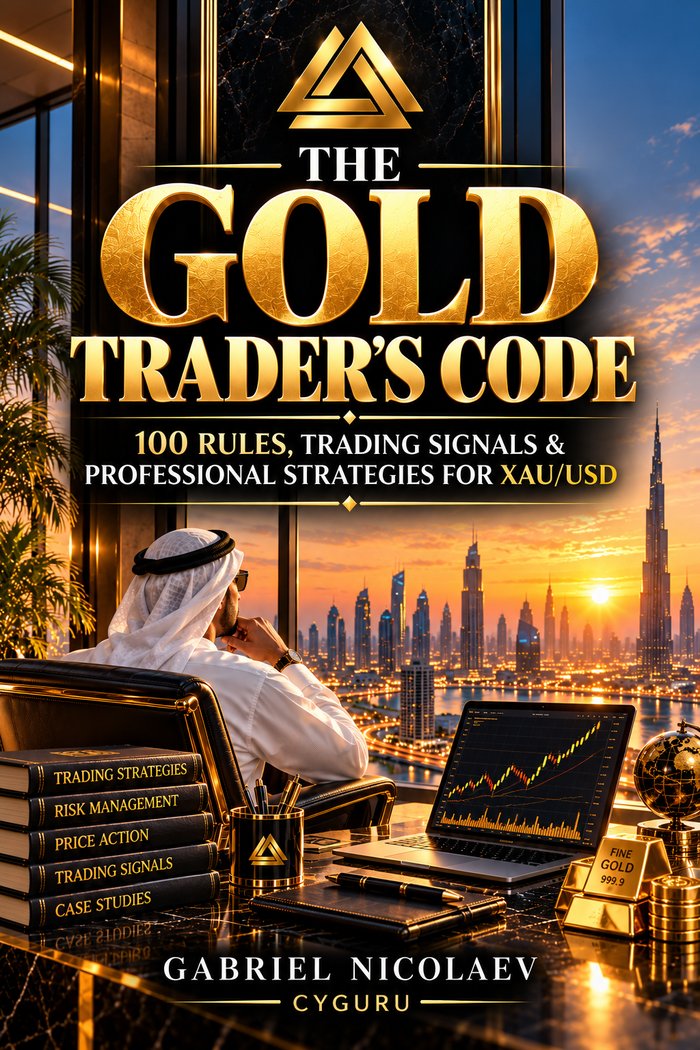
THE GOLD TRADER’S CODE
A trading rule earns its place when it changes a decision under pressure. The Gold Trader’s Code offers a starting point for thinking about the relationship between written rules, market observations and repeatable execution.
View & order on CYGURU.com ↗