
You Can Enjoy This Conversation and Still Need to Leave.
Learn to close an enjoyable conversation without inventing rejection, neglecting your next commitment or asking another person to guess when you need to leave.

IN THIS ARTICLE
Pleasure does not cancel the next commitmentDo not ask another person to infer your timetableResearch gives a reason to distrust easy guessesMake the closing sentence warm and completeConsider the enjoyable encounter after a meetingDistinguish reluctance from a relational threatLeave room for another person's unfinished sentenceProtect the memory by keeping the next promisePleasure does not cancel the next commitment
The conversation is good. You are laughing, discovering common interests and feeling unusually at ease. You also promised to collect someone in twenty minutes. Instead of saying that, you start watching the time and hoping the other person will create a natural ending. Now your attention is divided between the person in front of you and a responsibility that is becoming harder to meet. CyGuru psychology examines the hidden rule beneath this hesitation: must leaving mean that the conversation has stopped mattering? An enjoyable exchange and a real departure time can coexist. You do not have to make the encounter unpleasant before ending it. The practical task is to close something valuable while it is still valuable, without converting a scheduling limit into an invented judgment about either person's worth.
Do not ask another person to infer your timetable
Your conversation partner may not know about the collection, appointment or journey that follows. A glance at your watch can mean many things. They may assume you are checking a notification or simply moving your hand. If you need to leave at a particular time, put that information into words. Offering it early can be especially useful: you have ten minutes and are pleased to talk. That creates a shared frame without requiring a countdown at every sentence. It also lets the other person choose whether to begin a complicated story or save it for another meeting. Clear timing is not an instruction to make every spontaneous encounter efficient. It is information that helps a spontaneous encounter fit into two lives whose commitments are otherwise largely invisible to one another.
Research gives a reason to distrust easy guesses
Mastroianni and colleagues examined conversational endings across two studies. Participants often did not accurately know when their partners wanted to finish, and actual endings did not reliably match both people's wishes. The finding does not mean every conversation runs too long; some people wanted more time. It also does not supply a script proven to preserve every relationship. Its modest lesson is that an apparent flow of conversation cannot tell you exactly what another person wants. You may both be waiting for permission to leave, or you may each wish for another hour. A clear statement about your own timing gives information that polite guessing cannot provide. The recommendations in this essay apply that observation to ordinary commitments. They are practical proposals, rather than a clinical account of why you find a particular goodbye difficult.
Make the closing sentence warm and complete
A useful closing acknowledges the exchange and states the action. You have enjoyed talking and need to leave for the appointment. Keep your reason honest. Do not invent a distressed relative when the actual reason is a commitment you intend to keep. Avoid turning the goodbye into a request that the other person certify your innocence. Repeated apologies can restart the very conversation you are trying to end. If you want to continue later, propose something realistic rather than offering a vague promise you will avoid. The warmth belongs in how you recognize the person and the time together. The clarity belongs in what happens next. Neither requires a dramatic speech. A direct, considerate departure can convey more respect than remaining physically present while becoming increasingly distracted, resentful or anxious about the clock.
Consider the enjoyable encounter after a meeting
Imagine two colleagues who discover a shared interest after a work event. One has a train to catch. They keep talking, hoping each new subject will conclude neatly, then rush away abruptly when the remaining travel time becomes impossible. A small early statement could have changed the ending: there are five minutes before departure, and the discussion deserves another occasion. They exchange an appropriate contact detail and the colleague leaves when promised. This version does not guarantee friendship or another meeting. It preserves the possibility without making the train an adversary. The example concerns coordination, not proof of exceptional confidence. An ordinary sentence makes a limit visible before pressure turns it into a hurried exit that communicates less appreciation than the speaker actually feels.
Distinguish reluctance from a relational threat
Sometimes you hesitate because you do not want the pleasant moment to end. Sometimes you anticipate punishment, anger or accusations for leaving. These are different situations. The first may call for acknowledging that finite experiences can still be worthwhile. The second may require a broader examination of the relationship and support appropriate to the circumstances. Do not reduce a repeated pattern of coercive conduct to a personal failure to say goodbye gracefully. CyGuru's nervous-system doctrine offers an interpretive vocabulary for the pressure you notice, but it cannot establish another person's motives or assess your safety from a brief example. Start with behavior you can describe: what happens when you state a reasonable limit? The answer is more useful than assuming that every difficult ending has the same psychological source or the same conversational solution.
Leave room for another person's unfinished sentence
A clear ending can still be considerate. Allow a reasonable closing thought when circumstances permit, rather than announcing departure and immediately walking away. If the topic has become sensitive, acknowledge that it deserves more attention than you can give at that moment. Ask whether another time would help. You remain responsible for the commitments you actually make; do not offer ongoing support merely to escape discomfort. In a casual encounter, a simple expression of pleasure may be enough. There is no universal formula that determines the correct length of a goodbye. Practical judgment includes the setting, accessibility needs, the relationship and the time available. The aim is to avoid two extremes: endless indirect signals on one side and treating another person's conversation as an item you can terminate without acknowledgement on the other.
Protect the memory by keeping the next promise
After leaving, follow through on any specific arrangement you offered. If you suggested a future conversation, make contact as agreed or honestly revise the plan. If you merely said it was good to meet, you do not need to manufacture a new obligation. Notice whether you can remember the exchange with pleasure without auditing the goodbye for imagined offenses. The Human Codes perspective places agency in this ordinary consistency: your words describe what you can offer and your behavior supports those words. You can enjoy company without becoming indefinitely available. You can keep a promise elsewhere without rewriting the encounter as a burden. A conversation does not need to exhaust itself before it has earned an ending. Sometimes leaving while there is still more to say preserves both the connection and the life to which each person must return.
Continue the reading path
- From Urgency To Flow: Which task feels urgent mainly because it has never been clearly defined?
- The Power Of Words: Which promise has your language created that your behavior has not yet honored?
Sources and further reading
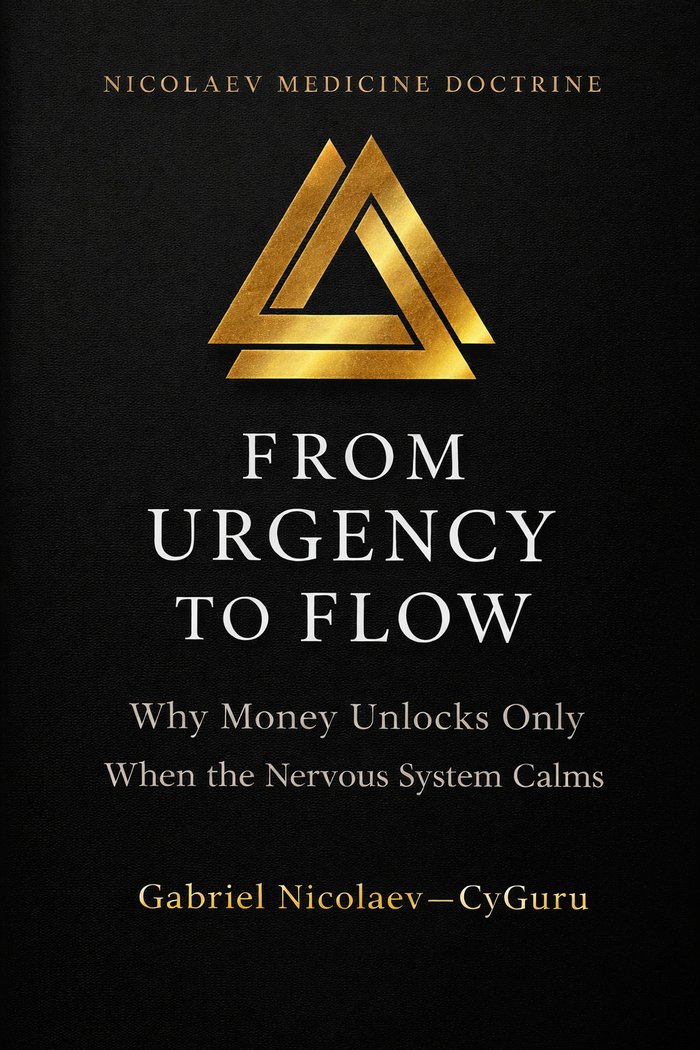
From Urgency To Flow
Urgency can keep a person moving while making it difficult to choose a direction. This title opens a conversation about pace, attention and the difference between necessary speed and a habitual sense of being late.
View & order on CYGURU.com ↗