
Do Not Let Your Best Month Write Every Future Bill
Examine irregular income, recurring commitments and the emotional meaning of a good month through a practical CyGuru reading of financial decisions.

IN THIS ARTICLE
The exceptional month can feel like a new identityA balance and a rhythm answer different questionsSeparate confirmation from possibilityGive recurring commitments a separate decisionConsider the consultant with a delayed project cycleNotice what spending is being asked to proveReview the weak period before it becomes a surpriseLet the good month improve the whole sequenceThe exceptional month can feel like a new identity
A large payment arrives after a difficult period. You can finally breathe, and the relief quickly becomes a story: this is the level at which life now operates. You upgrade a recurring expense, promise more support and allow several new commitments to enter the calendar. The money was real. The assumption that it represents a permanent change may not yet be. In the CyGuru interpretation, the important transition is from receiving income to assigning it authority over the future. A good month can improve your position without being evidence that every later month will resemble it. The distinction is easy to describe and harder to preserve while relief is offering an attractive account of who you have become.
A balance and a rhythm answer different questions
The balance shows what is available at a particular moment. A cash-flow view asks when income is expected and when obligations become due. These questions matter when payments arrive unevenly or clients pay later than anticipated. The CFPB cash-flow tool focuses on the timing of income and expenses across weeks. That is a useful factual foundation, not a promise that tracking will create sufficient income. A person may understand the timing accurately and still face a genuine shortage. The nervous-system lens adds a behavioral question: are you making commitments from the relief of seeing a higher balance while leaving the coming sequence unexamined? The numbers and the experience around them belong in the same review.
Separate confirmation from possibility
An invoice issued is not the same as money received. A promising conversation is not an executed contract. A history of strong sales does not establish an exact date for the next payment. Put these categories into your records in language that preserves their differences. You can plan scenarios around uncertain income, but avoid presenting an optimistic scenario to yourself as the ordinary baseline. This is especially important when someone else will depend on your promise. The purpose is not to become pessimistic or distrust every opportunity. It is to prevent confidence from changing the status of information without evidence. A forecast can be useful while remaining a forecast; it becomes dangerous when it quietly replaces a verified fact.
Give recurring commitments a separate decision
A one-time purchase has a different structure from a monthly obligation. Before adding the second, examine how it will be carried during a weaker period, whether it can be reduced and what ending it would require. Include relevant costs and terms rather than evaluating only the first payment. These are general decision questions, not a recommendation for any particular budget or contract. They help reveal whether a commitment is affordable across the rhythm you actually have. In the Human Codes language, freedom includes the ability to remain a choosing person after the exciting moment has passed. A commitment deserves attention partly because it continues speaking for you when your mood and circumstances change.
Consider the consultant with a delayed project cycle
Imagine a consultant paid for a substantial completed project in March. They interpret the receipt as evidence of a stable new earnings level and increase fixed household expenses. April contains productive work but few receipts; May brings another delay. The resulting pressure is not proof that the consultant lacks ambition. It reveals that a project-based rhythm was translated into a salary-shaped set of commitments. A more informative review would compare receipts, essential obligations and the intervals between projects. The consultant may choose to preserve some money for uneven periods or revise the commitments, depending on their actual circumstances. Appropriate financial advice can help where the consequences are substantial. The case illustrates a mismatch in timing, not a universal percentage that every reader should save or a claim that irregular work is inherently irresponsible.
Notice what spending is being asked to prove
A purchase may be useful, enjoyable or professionally necessary. It may also be asked to confirm that the difficult period is over. If the object must demonstrate arrival, a reasonable question about affordability can begin to feel like an insult to your progress. Examine that reaction without shaming the desire. You can celebrate an achievement while choosing a form of celebration that does not commit future income you have not received. Conversely, refusing every enjoyable expense can become another rigid identity. The practical aim is to make the decision proportionate to the resources and terms involved. The doctrine is a way to examine the meaning attached to money, not an instruction to remove pleasure from financial life.
Review the weak period before it becomes a surprise
Choose a reasonable interval to compare expected receipts with confirmed obligations. Mark uncertainty clearly and identify what would require action if income arrived later. Where possible, communicate early about questions or constraints rather than waiting for alarm to become the only trigger. If there is an unavoidable shortfall, seek suitable advice and review options on their actual terms. Do not promise payment solely to end an uncomfortable conversation. A plan is not made more realistic by the sincerity of the person making it. The value of review is that it allows a difficult fact to become part of a decision while some room to respond may remain.
Let the good month improve the whole sequence
The deeper question is what the payment makes possible beyond the day it arrives. It may create room to reduce an obligation, absorb variability or choose work more deliberately. The best use depends on your position, not a slogan. Keep a record of what changed and review whether the following weeks became more manageable. This separates financial progress from the temporary intensity of relief. Within the CyGuru perspective, money becomes more useful when it supports a life that can be carried at an ordinary pace. A strong month can be welcomed fully without being allowed to impersonate a permanent guarantee. Receiving success and evaluating its implications are two parts of the same responsibility, not opposing attitudes toward abundance.
Continue the reading path
- THE 33 LAWS OF MONEY: Which money principle survives when your circumstances become less comfortable?
- The Energy Of Money: What meaning do you attach to money before considering what it can actually do?
Sources and further reading
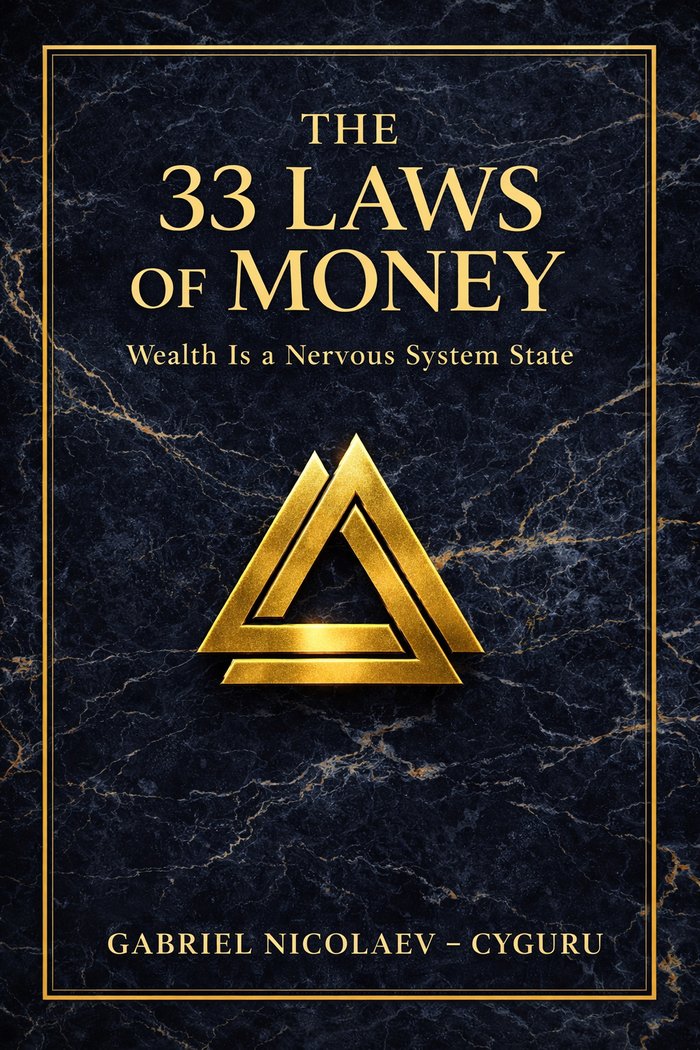
THE 33 LAWS OF MONEY
Money rules are most useful when they make trade-offs visible. This title brings the reader toward the principles behind earning, spending and keeping resources, rather than the appeal of a single financial shortcut.
View & order on CYGURU.com ↗