
Oil, Conflict and Economic Power: Follow the Dependency
Understand oil-related conflict through supply routes, price expectations, contracts and practical exposure without reducing every war to one hidden cause.
IN THIS ARTICLE
Energy turns a distant event into a local costFollow the chain from production to usable supplyA chokepoint concentrates dependencePrices can respond before physical shortages arriveThe cost does not reach everyone in the same wayInflation is a transmission question, not a single switchA changing order is not evidence of one hidden controllerPreparation should be proportionate to the decisionClarity follows the route, the contract and the consequenceEnergy turns a distant event into a local cost
A conflict can begin far from a household and still enter its budget through fuel, transport or the cost of delivered goods. Oil matters because it is embedded in activity, not merely quoted on a financial screen. The connection becomes useful when traced through actual routes and obligations. A dramatic headline alone cannot tell you how much a particular business or family will be affected, when the effect will arrive or which response would help.
The economics of war therefore begins with exposure. What resource is involved? Which movement or production process could be interrupted? Who has alternatives, and who must continue buying despite the higher cost? These questions reveal leverage without requiring a theory that every conflict has one concealed economic cause. Political decisions, security concerns and human consequences remain part of the explanation. An economic lens adds structure when it clarifies those relationships rather than replacing them with a universal story.
Follow the chain from production to usable supply
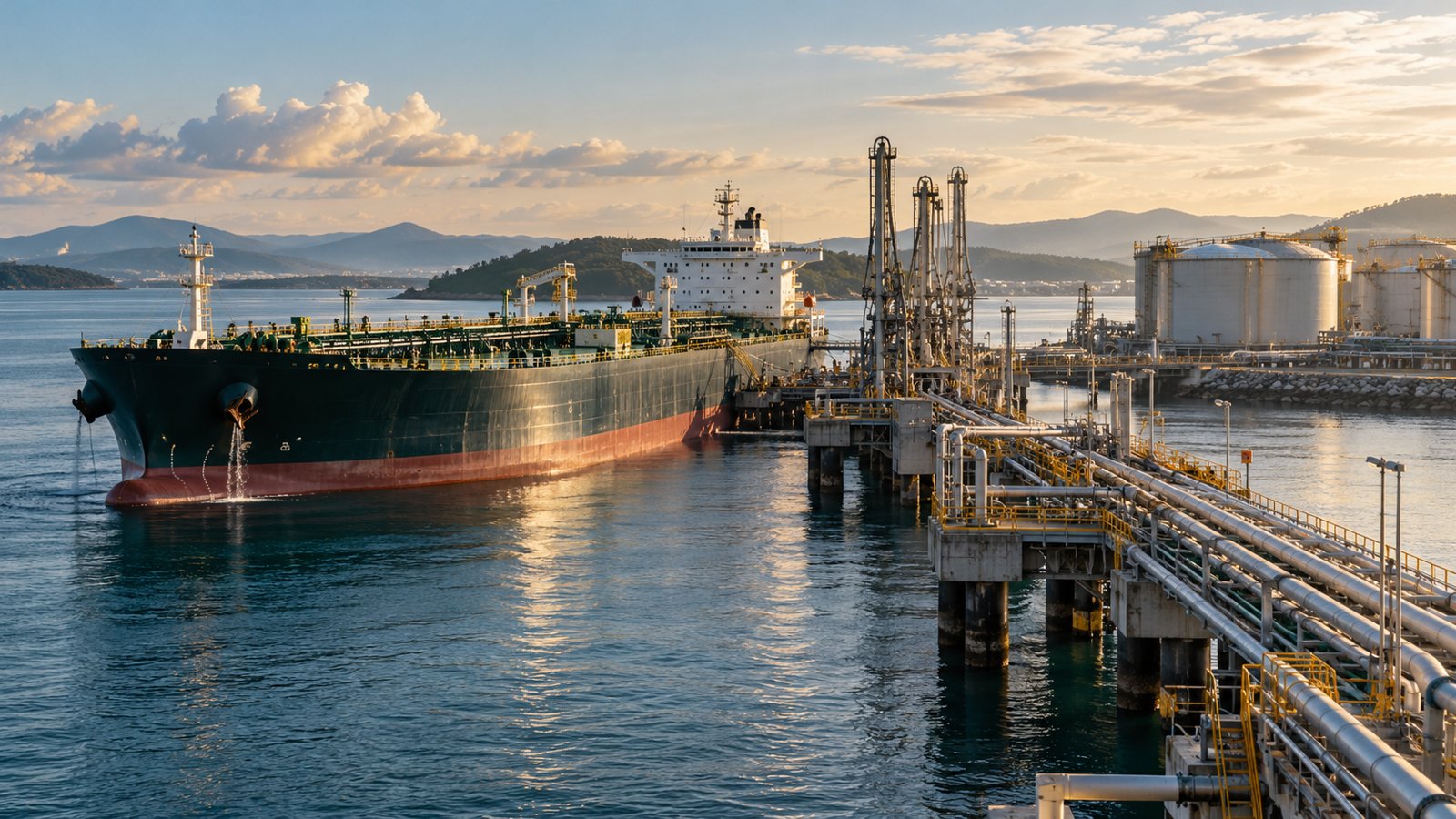
An oil reserve is not the same thing as an available delivery. Production, storage, shipping and refining connect the resource to the products people actually use. A disruption at one point can matter even when crude exists elsewhere. The practical issue concerns whether a suitable alternative can reach the right place at the right time, under terms that the buyer can accept and the surrounding infrastructure can accommodate.
Consider an illustrative supplier that can obtain material from another region but needs a longer journey and different delivery schedule. The alternative may reduce one vulnerability while increasing another. Calling the system diversified does not settle whether the replacement works under pressure. A credible resilience claim should identify capacity, timing and dependencies. Otherwise a map containing several potential suppliers can create reassurance without showing how the business would continue operating if the preferred route became unavailable.
A chokepoint concentrates dependence
A narrow route can carry a large share of activity because geography and infrastructure make it useful. The Strait of Hormuz is a prominent example in oil trade, discussed by both the EIA and IEA. The importance of a route concerns the flow and the limits of alternatives, not simply its width on a map. A threatened passage can therefore become a source of bargaining power, uncertainty and costs beyond the countries immediately surrounding it.
Rerouting is a question to investigate, not an automatic solution. A vessel may travel farther, a pipeline may have limited available capacity or a substitute route may not serve the same cargo. These distinctions matter to analysis. Avoid assuming that the existence of another line on a map means the original exposure has disappeared. Equally, a threat to a route should not be described as a confirmed interruption before the evidence establishes what has actually happened.
Prices can respond before physical shortages arrive
Markets incorporate expectations as well as present deliveries. The EIA describes several influences on oil prices, including supply, demand and geopolitical conditions. If participants anticipate disruption, prices may change before a shipment is lost. That movement does not itself prove a particular event will occur. It shows that the current price reflects a changed assessment of conditions, with uncertainty remaining about how the situation and other influences will develop afterward.
This is why the same headline can invite contradictory predictions. One account emphasizes a possible supply loss; another expects weaker demand to offset it. Examine the assumptions rather than choosing the more confident tone. What scale and duration of interruption does each forecast assume? Which alternative is available? What information would change the view? A useful forecast is an explicit conditional account, not a claim that geopolitical anxiety makes one market outcome inevitable.
The cost does not reach everyone in the same way
A business whose expenses depend heavily on transport may face a different pressure from one whose main obligations are local services and wages. Contract terms also matter. A price change may be absorbed temporarily, passed through quickly or appear only when an agreement is renewed. Understanding the exposure requires more than identifying the commodity. It requires the particular arrangement through which a cost becomes payable and the options available when it changes.
Imagine two delivery firms serving the same city. One has pricing terms that can be reviewed regularly; the other has fixed customer prices and a fuel cost that can vary. The same market movement can therefore affect their cash flow differently. The example does not predict which firm succeeds. It shows why economic analysis becomes more actionable when it reaches the contract and payment schedule instead of stopping at the assertion that expensive oil harms every business equally.
Inflation is a transmission question, not a single switch
Energy costs can feed into other prices, but the effect depends on how costs move through the system and what else is happening. A rise in one input does not supply a complete forecast for every price, wage or interest-rate decision. Ask which costs are exposed, how quickly they can change and whether the buyer has substitutes. The chain may be substantial while still varying across sectors, countries and periods.
For a household, the practical exercise is a review of obligations rather than a wager on the next headline. Which expenses are essential, which are flexible and when will the amount be known? For a business, the question may concern working capital or a supplier discussion. The response should fit the actual vulnerability. A dramatic investment made to escape uncertainty can create a new exposure while leaving the original operating problem unresolved and less visible.
A changing order is not evidence of one hidden controller
The phrase new world order can describe shifts in influence, trade relationships or bargaining power. It should not automatically imply a unified secret design. Countries, institutions and firms have different interests, information and limits. Some outcomes emerge from their interaction without any participant having intended the entire result. A serious explanation distinguishes a documented decision from a pattern observed afterward and a motive inferred by the commentator.
Ask what would disprove the preferred account. If every development, including an apparent contradiction, is interpreted as confirmation of a concealed plan, the explanation becomes difficult to test. Analysis should make the world more intelligible, not make inquiry unnecessary. Knowing who benefits from an outcome can identify a question worth investigating. It does not independently prove who caused the event, possessed complete control over it or anticipated all the consequences borne by others.
Preparation should be proportionate to the decision
A useful review identifies a specific exposure and a feasible response. A business might clarify delivery assumptions, compare a genuine alternative or discuss payment terms. An individual might examine recurring costs and avoid a commitment that only fits if conditions remain ideal. These are illustrations of a process, not a universal financial prescription. The appropriate action depends on resources, responsibilities and the professional advice relevant to the decision being considered.
Separate information needed for safety from commentary about markets. A structural essay cannot provide live travel guidance, establish whether a route is safe today or replace instructions from appropriate authorities during an emergency. Likewise, a general explanation of oil does not tell a reader which asset to buy. Keep the purpose visible: understand the dependency well enough to ask a better question, then obtain current, decision-specific information before acting where the stakes require it.
Clarity follows the route, the contract and the consequence
Oil, Conflict & the New World Order and The 33 Laws Of Money connect power with the arrangements through which resources move. Read them with an operational sequence in mind: identify the possible disruption, trace who depends on it and locate the commitment through which the consequence reaches you. The sequence supports analysis without requiring certainty about every political motive or pretending that one commodity explains the whole of a conflict.
War causes human losses that cannot be reduced to market opportunity. Understanding its economics should sharpen responsibility rather than turn suffering into a strategy slogan. The strongest perspective preserves both the structure and the people within it. Follow the evidence, distinguish a scenario from an event and keep a proposed response proportionate to your actual exposure. Energy is a source of leverage because lives depend on functioning systems; that dependence is the reason careful analysis matters.
Continue the reading path
- OIL, CONFLICT & THE NEW WORLD ORDER: Who depends on the resource, the route or the agreement being protected?
- THE 33 LAWS OF MONEY: Which money principle survives when your circumstances become less comfortable?