
The Payment Is Automatic. Is the Choice Still Yours?
Review recurring subscriptions as continuing choices, with clear terms, practical reminders and an honest distinction between convenience and forgotten consent.

IN THIS ARTICLE
A small charge can become a permanent visitorDistinguish permission from present usefulnessRead the future payment before accepting the introductory offerConvenience needs an owner and a review pointConsider the three tools bought for one finished projectDo not confuse the discomfort of cancelling with evidence of valueComplete the administrative endingLet repetition remain chosenA small charge can become a permanent visitor
You open a statement and recognize the service but not the decision to keep paying for it. Months ago, you needed an editing tool for one project. The project ended; the subscription continued. The amount was small enough to escape the kind of attention you give a major purchase. Yet the service now occupies a recurring place in your finances without receiving a recurring place in your judgment. In the CyGuru reading, the question is not whether automatic payment is inherently harmful. It is whether an arrangement that once served you has become difficult to see. Convenience should carry a decision you still endorse. It should not quietly substitute for the opportunity to notice that your needs have changed since the original transaction.
Distinguish permission from present usefulness
You may have agreed to renewal clearly and still decide that the service no longer fits. Alternatively, you may discover a charge you do not recognize or believe you authorized. These are different situations. The first concerns whether to continue an existing arrangement; the second may require checking records and contacting the provider or payment institution about an apparent error. Do not blur them by calling every unwanted expense a fraud or treating every charge as acceptable merely because it appeared on a statement. Begin with what you can establish: the provider, the account, the terms you have, the billing period and the route for questions. A clear account of the transaction makes your next action more useful than a general feeling of having been careless.
Read the future payment before accepting the introductory offer
The US Federal Trade Commission advises consumers to examine trial terms, renewal costs and cancellation instructions, monitor statements and preserve cancellation records. Those are practical checks, not a determination of every reader’s legal rights in every jurisdiction. For a new subscription, ask what happens after the attractive opening period. What will be charged, when, for what duration and through which payment method? Identify how you would end or change the arrangement before you need to do so. The introductory price can be relevant without being the whole price story. A service that is useful for one month may be unsuitable for a year. Let the agreement include the future you are actually accepting, rather than only the version of the offer that makes the first click feel inexpensive.
Convenience needs an owner and a review point
An automatic payment can be a sensible way to maintain an important service. The useful question is who will notice when it stops being sensible. In a household, a shared subscription may belong to an old email address that nobody checks regularly. In a business, the employee who opened the account may have left. Establish a simple record of the service, purpose, renewal date and person responsible for reviewing it. Protect sensitive account information appropriately. This is an editorial recommendation for maintaining visibility, not a universal administrative system everyone must adopt. The record should be light enough to use. If maintaining the spreadsheet becomes more demanding than the choices it supports, simplify it while preserving the information needed to make an informed decision.
Consider the three tools bought for one finished project
Imagine a designer who subscribed to three services while preparing a client presentation. Six months later, one remains central to paid work, one duplicates a tool the employer provides and one was opened only during the trial. Cancelling all three to punish the oversight would ignore their different roles. A more accurate review asks what each service now contributes and what would happen without it. The designer keeps the first, checks the employer arrangement before cancelling the second and follows the cancellation process for the third. The point is not the number removed. It is the return of an understandable reason for every continuing charge. The review produces a financial decision rather than a brief performance of austerity that may need to be reversed next week.
Do not confuse the discomfort of cancelling with evidence of value
A cancellation screen may remind you of features you have never used. You may imagine becoming the person who finally learns the software or watches the entire course. That possibility can be sincere while remaining different from your present needs. Ask what specific use is likely within the next billing period and what commitment would make it real. In the Human Codes perspective, the subscription can sometimes preserve an anticipated identity: organized, educated, creative or professionally prepared. This is an interpretation to examine, not a scientific explanation of why any individual keeps a service. You do not need to condemn aspiration. You need to distinguish paying for access from making a workable place for the activity that access is supposed to support.
Complete the administrative ending
If you decide to cancel, use the provider’s actual process and keep the confirmation or relevant correspondence. Check what happens to stored work, shared access and any remaining paid period before taking irreversible steps. Do not assume that deleting an application ends the billing agreement. If the terms or charges are disputed, seek clarification through the appropriate provider, payment institution or consumer channel for your circumstances. This essay cannot determine which remedy applies to a particular contract. The practical principle is to make the ending observable. A decision made privately in your head does not necessarily reach the system that is still authorized to collect payment. Finish the relevant action and give the next statement enough attention to see whether the account reflects it.
Let repetition remain chosen
A useful review may leave most of your subscriptions untouched. That can be a good result if their purposes remain clear and their costs fit your situation. Agency does not require manually reconsidering every payment each month. It requires a reasonable way to revisit the arrangement when information, price or need changes. Keep renewal reminders where you will actually see them, and give an unexplained charge an identifiable next step. The nervous-system vocabulary of CyGuru is used here to notice avoidance and the desire for immediate relief; it does not establish a biological cause for forgotten payments. The final measure is practical: can you explain what continues, why it continues and how you would change it? Automation serves you best when it carries your decision without making that decision disappear.
Continue the reading path
- THE 33 LAWS OF MONEY: Which money principle survives when your circumstances become less comfortable?
- DECISION: What cost are you paying to keep this choice undecided?
Sources and further reading
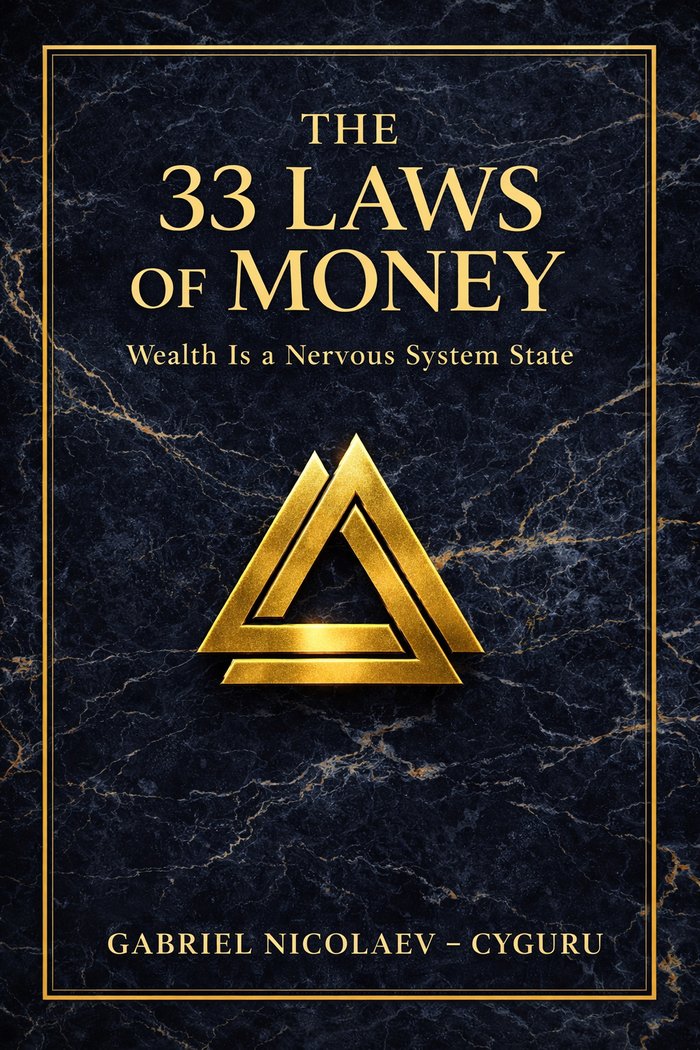
THE 33 LAWS OF MONEY
Money rules are most useful when they make trade-offs visible. This title brings the reader toward the principles behind earning, spending and keeping resources, rather than the appeal of a single financial shortcut.
View & order on CYGURU.com ↗