
You Have Already Had the Argument. The Other Person Has Not Arrived.
Distinguish useful preparation from imagined conflict, and enter difficult conversations with questions that leave room for an actual answer.

IN THIS ARTICLE
Preparation can quietly become a private trialSeparate the fact from the predicted responseChoose an objective that requires participationUse rehearsal to prepare a question rather than a verdictConsider a missed handover without making it an identity disputeDo not turn a useful lens into a biological certaintyLeave room to notice a different responseReview the difference between preparation and performancePreparation can quietly become a private trial
Tomorrow you need to discuss an error with a colleague. Tonight you construct their objections, answer them and imagine the disrespect that will follow. By morning, you have developed a strong position against an argument nobody has made. You may even feel that the colleague has already failed to listen. The CyGuru perspective asks where preparation became an internal encounter in which you controlled every voice. Rehearsal can identify a difficult point, but it can also produce certainty without additional evidence. The other person then arrives into a conversation whose emotional history exists only on your side. They are expected to answer not only the issue but the accumulated meaning of several imagined exchanges.
Separate the fact from the predicted response
Write the observation you need to discuss without explaining the other person’s motives. The report arrived after the agreed time is different from you do not respect my work. Then write what you want to understand: the reason, the effect and the arrangement needed next. Predictions can be recorded separately as possibilities. This prevents a plausible fear from taking the position of an established fact. You are not required to assume goodwill regardless of evidence. If there is a history of evasion, include that history accurately. The distinction is between remembering actual behavior and giving imagined behavior equal authority because your body responded to it with genuine tension.
Choose an objective that requires participation
Winning an anticipated exchange is a different objective from understanding a problem or renegotiating an agreement. A useful conversation objective leaves something for the other person to contribute. You might need to learn whether the deadline was realistic, whether information was missing or whether someone ignored a clear requirement. These possibilities lead to different decisions. If the objective is only to obtain an admission that your interpretation was correct, questions can become disguised accusations. The doctrine’s concern with authority becomes practical here: can you retain your position while allowing information to change it? A considered response need not arrive fully completed before the person whose conduct you are discussing has spoken.
Use rehearsal to prepare a question rather than a verdict
A short rehearsal can help you say the opening clearly. State the event, its practical consequence and the question you need answered. Then stop rehearsing at the point where the other person must respond. This stopping point matters because continuing alone allows you to invent the evidence that justifies the next escalation. You can prepare for several possible answers without deciding which will occur. If you anticipate becoming overwhelmed, choose a suitable setting and a way to pause. Preparation should make contact with reality easier. If it leaves you more committed to the imagined encounter than the actual subject, it has begun doing a different job.
Consider a missed handover without making it an identity dispute
Imagine a project manager waiting for a colleague’s files. The files arrive late, and the manager spends the evening predicting excuses. In the actual meeting, a narrow opening would identify the delay, explain which task was affected and ask what happened. The colleague might reveal an overlooked dependency, acknowledge poor planning or evade responsibility. None should be decided in advance. If a dependency was missing, the workflow needs repair. If responsibility was ignored, expectations and consequences need clarification. The same opening can support both findings because it is organized around information rather than a predetermined character judgment. The manager can be firm without performing the argument rehearsed the night before. That firmness is often more effective because it does not require defending invented details.
Do not turn a useful lens into a biological certainty
The CyGuru nervous-system doctrine offers an interpretive language for noticing how anticipated conflict affects perception and conduct. It does not establish that every rehearsal is a trauma response or that a particular sensation reveals the other person’s intentions. Public guidance from NIMH supports caring for mental health and seeking help when difficulties persist; it does not diagnose the person preparing this meeting. Likewise, general knowledge about sleep does not settle the dispute. If repeated rehearsal interferes with rest, functioning or relationships, appropriate support may be useful. Keep the observation specific enough that practical preparation, the real circumstances and the need for assessment can all remain part of the inquiry.
Leave room to notice a different response
During the conversation, listen for what is actually being said. If it differs from your prediction, allow the difference to matter. You may need to clarify a surprising answer rather than immediately returning to the next prepared point. Summarize what you understand and check it before drawing a conclusion. If the interaction becomes unproductive, name the issue and agree on a suitable next step where possible. You are not obliged to continue indefinitely or accept an unsupported explanation. The aim is to base your decision on this encounter, including its limitations, rather than use the encounter as a stage on which an already completed internal argument must be reenacted.
Review the difference between preparation and performance
Afterward, note which predictions occurred, which did not and what new information changed the task. This review is more informative than asking whether you appeared perfectly calm. You might feel uncomfortable and still ask accurate questions, keep a boundary and make a responsible decision. You might appear composed while refusing every answer that challenges your original story. In a Human Codes reading, regulation supports contact with the situation as it is. A difficult conversation remains difficult, but it becomes less burdened by the demand that another person answer for a version of themselves you constructed alone. Preparation has done its work when it lets the real conversation begin rather than replacing it.
A useful final question before the meeting is what would count as a satisfactory answer even if it is not the answer you expected. Define that possibility now. If every acceptable answer requires agreement with your interpretation, you may be preparing a demand for validation rather than an inquiry. Recognizing this does not remove your right to a firm boundary; it helps you know which conversation you are actually proposing.
Continue the reading path
- CALM UNDER FIRE: What would a proportionate response look like before emotion makes it feel too small?
- THE NERVOUS SYSTEM CODE: What changes in your behavior when the same situation feels safe rather than threatening?
Sources and further reading
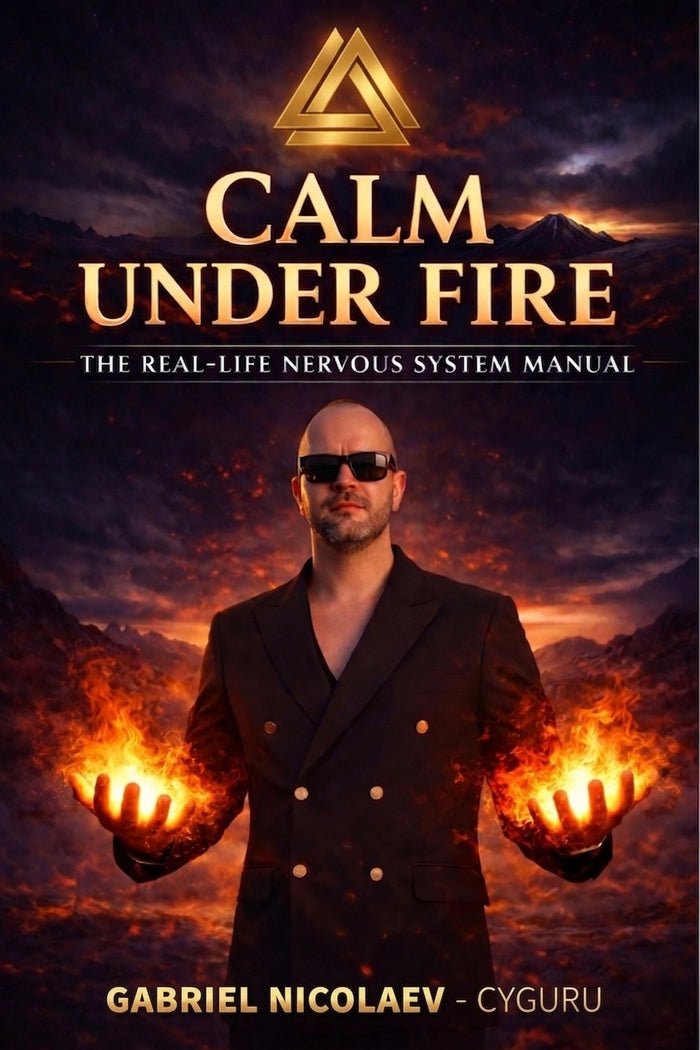
CALM UNDER FIRE
Pressure can create a false choice between reacting immediately and doing nothing. Calm Under Fire invites attention to the space in which a person can assess a situation without pretending that the stakes have disappeared.
View & order on CYGURU.com ↗