
You Can Stop a Project Without Erasing the Person Who Began It
Examine sunk-cost identity in an unfinished project, distinguishing evidence for continuing from the need to defend a public or private story.

IN THIS ARTICLE
The project begins to stand for more than its purposeSeparate past expenditure from the next commitmentAsk what evidence would change your answerDistinguish grieving a direction from choosing it againReview a manuscript that has become permanently almost finishedMake a pause different from indefinite avoidanceCommunicate the change at the scale others needCarry forward the learning without preserving every formThe project begins to stand for more than its purpose
You started a venture, manuscript or qualification for a clear reason. Years later, the conditions have changed, but leaving feels impossible. The difficulty is no longer only the cost already incurred. The project has become part of how you introduce yourself and how others recognize your ambition. In the CyGuru perspective, this is a question about the relationship between identity and continuing consent. Do you still choose the work, or are you protecting the person you said you would become? A project can deserve persistence. It can also survive because stopping would expose a story that has not been allowed to change since the original announcement.
Separate past expenditure from the next commitment
Money, time and effort already spent deserve accurate accounting. They do not by themselves determine whether the next month of work is justified. Examine what continuing now requires and what it can reasonably produce under current conditions. Include obligations to other people, contractual consequences and resources you can genuinely carry. This is a practical decision framework, not financial or legal advice about a particular venture. Where consequences are substantial, qualified guidance may be necessary. The doctrine adds an inquiry about personal meaning; it cannot replace the facts required to assess the project. A moving story about perseverance is not an estimate of remaining cost.
Ask what evidence would change your answer
Before deciding, identify the observations that would support continuing, pausing or ending. Perhaps the central assumption needs testing, a source of funding has disappeared or the work remains valuable but requires a smaller scope. If no imaginable evidence could justify a change, the decision may have become a loyalty test rather than a review. Equally, a difficult week does not establish that the project should end. Use an appropriate period and relevant information. A reasonable decision can tolerate the possibility that your current preference is wrong. That openness is especially important when you have spent a long time explaining to other people why the project proves something about you.
Distinguish grieving a direction from choosing it again
An ending can involve losing a hoped-for future, status or connection with the person who began. These losses can be meaningful even when stopping is responsible. Allowing that meaning is different from treating sadness as evidence that the decision must be reversed. The emotional consequence belongs inside the situation; it should not acquire exclusive authority over it. In the Human Codes reading, agency includes the ability to remain present to a cost without immediately choosing whatever removes the feeling. Continuing merely to avoid grief can consume resources needed for a different life. Stopping merely to avoid difficulty can do the same. The task is to understand which cost you are accepting and why.
Review a manuscript that has become permanently almost finished
Imagine an author who has been revising a book for several years. Each revision changes the promise, audience and structure. The author says the time already invested makes finishing essential, but cannot define what completion now means. A useful review would establish the book’s present purpose, what remains and a realistic standard for publication. It might produce a finite completion plan. It might reveal that the useful material belongs in a shorter work. It might justify putting the project aside. None of those outcomes requires declaring the years meaningless. The work may have developed skills and clarified questions even if its original form is abandoned. What must be examined is the next commitment, not whether the entire past can be made emotionally painless.
Make a pause different from indefinite avoidance
If you pause, specify what will be reviewed and when. A pause with no condition for return can preserve the identity of continuation while avoiding the demands of either completing or ending. That ambiguity may feel protective because no public account needs to change. It can also occupy attention and practical space indefinitely. A defined pause can be useful when information is missing or resources need to recover. Record what happens to obligations and materials during it. If the review date arrives and nothing has changed, examine whether the pause is still serving a decision or has become a method of keeping the decision permanently outside your responsibility.
Communicate the change at the scale others need
People affected by the project deserve accurate information about commitments, dates and consequences. They do not necessarily require a complete account of your identity. You can explain that the scope has changed, that the work is stopping or that a revised plan will be confirmed at a defined time. Take responsibility for promises already made and seek appropriate help where agreements are consequential. Avoid making a new grand declaration simply to replace the emotional authority of the old one. A quieter, accurate explanation may be more credible. General mental-health guidance supports seeking help with persistent difficulty; an essay cannot decide whether the distress around this project needs professional attention.
Carry forward the learning without preserving every form
A project can end while knowledge, relationships and useful material continue. Identify what can responsibly be retained, shared or applied elsewhere. Then examine the time and resources the ending releases. They need not immediately be occupied by another ambitious identity. The CyGuru interpretation of purpose is stronger when it includes revision rather than requiring a person to remain loyal to every past intention. You can honor the seriousness with which you began and still disagree with the decision now. The deeper continuity may lie in the quality of judgment you are willing to develop, not in keeping one project alive forever so that nobody can say you changed your mind.
Write the case for continuing and the case for ending without including what either choice would make you look like. Then examine the identity layer separately. It may still matter, particularly where relationships or professional reputation are affected, but it should become a stated consideration rather than an invisible veto. A choice becomes easier to understand when its practical consequences and its symbolic meaning are allowed to remain different questions.
Continue the reading path
- Nothing Lasts Forever: What are you trying to preserve that has already begun to change?
- The Code Of Purpose: What responsibility would still matter to you without public recognition?
Sources and further reading
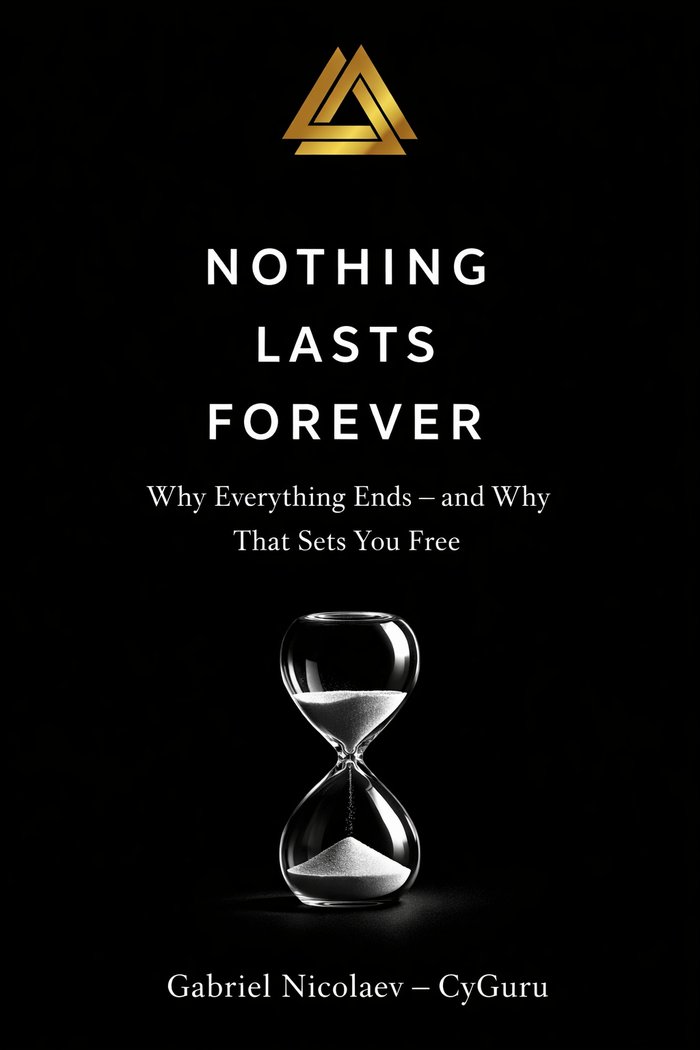
Nothing Lasts Forever
Impermanence can be understood intellectually long before it is accepted in a particular part of life. This title invites reflection on attachment, endings and the way a changing circumstance can expose an expectation of permanence.
View & order on CYGURU.com ↗