
Visiting Dubai: Plan the Journey Beyond the Skyline
Plan a considered Dubai visit with entry checks, practical transport, neighbourhood choices, cultural awareness and an itinerary that fits your priorities.
IN THIS ARTICLE
Design the trip around the experience you wantVerify entry and travel conditions before committingChoose the base by geography and daily useTreat climate and transport as schedule inputsBuild an itinerary with fewer, better combinationsUnderstand the complete cost before comparing pricesLearn the local boundaries before testing themChoose experiences that fit the people travellingLeave with understanding as well as photographsDesign the trip around the experience you want
Dubai can support a short cultural visit, a resort holiday, a family break or a practical exploration of future business and relocation. Those trips need different schedules. Begin with the purpose rather than a list of famous places. Decide whether you value walking through historic districts, contemporary architecture, beaches, food, desert landscapes or meetings. Then allocate time realistically instead of trying to collect every experience in one itinerary.
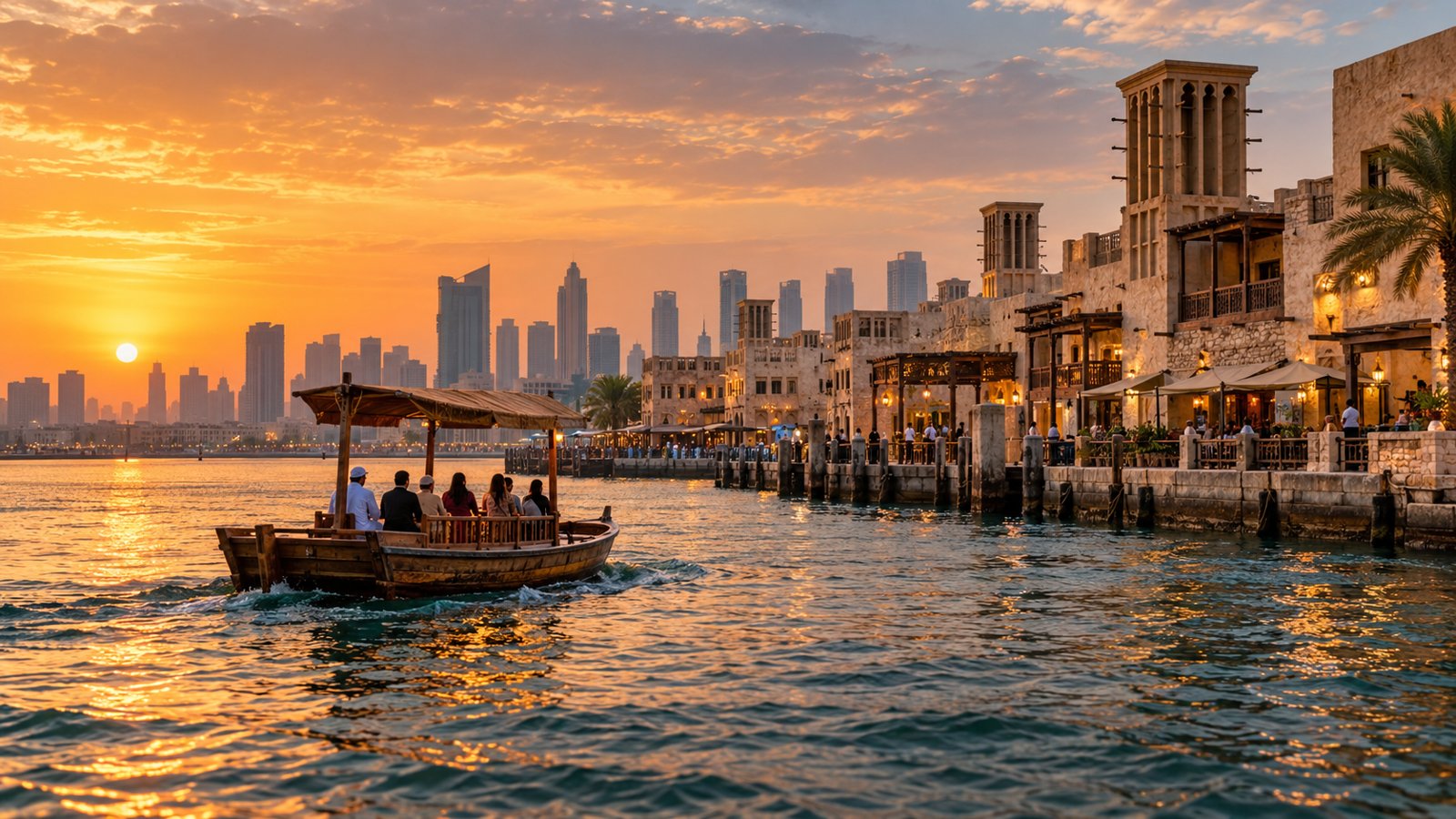
The most revealing visit often combines contrasting parts of the city. A morning around the Creek and a later view of modern development can provide more context than several similar attractions. Leave space to notice ordinary life: commuting, neighbourhood shops, public transport and the rhythm of a district after business hours. For someone considering a longer connection with the UAE, those observations can be more useful than a perfect photograph. A good trip should match the traveller's interests, energy and budget rather than an algorithm's image of Dubai.
Verify entry and travel conditions before committing
Entry arrangements depend on nationality, passport type, purpose and current requirements. Use official immigration and tourism guidance to confirm what applies to the actual traveller. Do not assume that another family member's eligibility or a previous visit determines the present answer. Check passport validity, any required permission, supporting documents and the terms relevant to children or a particular travel situation before buying non-refundable services.
Safety information also needs a current check. On 27 October 2026, the UK's official UAE advice described regional unpredictability and possible flight cancellations or airspace disruption. That is dated guidance for its intended audience, not a forecast for every departure. Consult your own government's advice, the relevant UAE authorities and the airline close to travel. Review insurance exclusions and assistance arrangements carefully. A general destination guide cannot guarantee an operating flight, valid entry permission or coverage for a particular disruption when circumstances change.
Choose the base by geography and daily use
The hotel sets the starting point for every journey. Compare its location with the places you intend to visit, not simply with photographs of the room. Check the practical walking route to public transport, access with luggage, nearby food options and whether a taxi will be needed for most outings. A lower room price can be offset by travel costs and hours spent crossing the city.
Different areas support different priorities. Heritage-focused visitors may prefer access to older trading districts. Beach-oriented travellers may place waterfront access above proximity to business meetings. A family may value room configuration, shade, pools and easy food arrangements. A business visitor may need reliable access to a particular office district. These are planning considerations rather than hotel recommendations. Confirm current facilities, construction around the property, accessibility and the final booking terms directly. The right base makes the intended trip easier instead of requiring the itinerary to compensate for it every day.
Treat climate and transport as schedule inputs
Outdoor comfort varies with season, time of day and individual health. Check the forecast and plan exposed activities around actual conditions rather than a fixed idea of holiday weather. Allow water, shade, rest and suitable clothing, particularly for children, older people and anyone with relevant medical needs. A route that looks short on a map may feel very different under strong heat or with limited shaded access.
Dubai's official tourism guidance describes options including public transport, taxis and marine journeys. Match the mode to the route and travellers. A Metro connection may work well for one outing, while a direct licensed taxi is more practical with luggage or an awkward final segment. Check current routes, operating hours and fares through the responsible operator. Avoid building a schedule that depends on several perfectly timed transfers. Travel time is part of the experience and budget, not an inconvenience to be excluded from planning until the first day.
Build an itinerary with fewer, better combinations
Group activities geographically where possible. For example, an illustrative heritage day might combine Al Fahidi, the Creek and nearby markets, subject to current access and opening information. A separate day could focus on Downtown architecture and a pre-booked attraction. Another could leave room for the coast or a carefully chosen desert experience. These are planning examples, not guaranteed schedules or statements about current availability.
Include a slower arrival period and some unscheduled time. Flight delays, tired children or an unexpectedly enjoyable district can make a rigid itinerary feel like an obligation. Book time-sensitive attractions only after checking cancellation terms and how they fit the wider day. Resist measuring value solely by the number of entrances purchased. A relaxed meal, a walk and a meaningful conversation may reveal more than rushing through another venue. The best schedule creates attention for the destination rather than continually forcing attention back to the timetable.
Understand the complete cost before comparing prices
A holiday budget needs more than the advertised hotel rate. Add transport, food, entry tickets, insurance, communications, applicable entry costs and the charges included or excluded in each booking. Read the final checkout amount and cancellation conditions before paying. A discounted package can still be poor value if it contains activities you do not want or transfers that make the day impractical.
Use current quotations for your dates and household rather than a universal daily allowance. Peak events, room type and booking conditions can change the comparison considerably. Keep some financial margin for disruption or a changed plan without treating that reserve as automatic shopping money. When comparing attractions or excursions, compare the actual inclusions, group size, duration, transport and safety arrangements. Price is meaningful only alongside what it buys. A more expensive option can be appropriate, but only when its additional value matters to the particular traveller rather than to the presentation around it.
Learn the local boundaries before testing them
An international atmosphere does not remove local laws and cultural expectations. Read current official information about public conduct, photography, religious sites, medicines and restricted items. Requirements can differ from the traveller's home country. Do not use another tourist's behaviour as proof that something is lawful or respectful. Ask the relevant operator or authority when a rule is unclear, especially before carrying controlled medication or restricted equipment.
Respectful travel also concerns the people encountered. Ask before photographing someone, particularly in a private or sensitive situation. Follow the specific requirements of a mosque or cultural venue rather than generalising from beach or resort clothing. Use licensed transport and providers whose identity and terms can be checked. Avoid making a public argument the centre of an unfamiliar legal environment. These principles are not a substitute for current rules. They create the habit of checking boundaries before an assumption becomes a preventable problem.
Choose experiences that fit the people travelling
A desert excursion should be evaluated for the actual participants, not only its promotional images. Ask about activities, vehicle arrangements, insurance, physical demands and alternatives. A quiet landscape-focused visit may suit someone who would not enjoy vigorous dune driving. People who are pregnant or have relevant health conditions should seek appropriate medical guidance and confirm operator restrictions before booking. A memorable experience does not require choosing the most physically intense option.
Families should consider the youngest or least mobile traveller when setting the pace. Allow food, rest, toilets and realistic transitions. Business visitors should distinguish a useful exploratory meeting from a commitment requiring legal or commercial review. A pleasant conversation during a short visit cannot establish the full economics of relocation or an investment. Keep tourism, employment and business permissions distinct. The trip can generate questions and relationships without requiring an immediate decision about a company, property or future life in the city.
Leave with understanding as well as photographs
Near the end of the visit, review what the trip actually revealed. Which districts felt workable? What did transport cost in time and money? Which experiences deserved more attention? If relocation is being considered, identify the questions that still need evidence: employment, licensing, housing, schooling, healthcare and the household budget. Observations from a holiday are useful inputs, but they are not the same as an operating plan for living there.
Your First 90 Days in the UAE and UAE: The Soul of the Emirates offer further reading for practical orientation and cultural context. Official travel references were checked on 27 October 2026; verify requirements, advice, opening times and booking conditions again for your departure. Dubai rewards curiosity that extends beyond its most familiar images. Plan enough to protect time and resources, then leave enough room to observe. The result can be more than a sequence of attractions: a clearer understanding of a city and of what you wanted from the journey.
Continue the reading path
- YOUR FIRST 90 DAYS IN THE UAE: Which early commitments would be difficult to reverse later?
- UAE & The Soul of The Emirates: What do you notice about the Emirates when business is no longer the only lens?