
The Song Brings the Feeling Back. Must It Bring the Life Back Too?
Listen to music connected with an earlier life while distinguishing memory, emotional meaning and present decisions, without turning nostalgia into an instruction to return.

IN THIS ARTICLE
A familiar introduction changes the roomResearch describes an association rather than a personal commandName what you are missing before choosing what to recoverRemember the ordinary days around the remembered eveningConsider the message drafted before the final chorusLet listening be enough when listening is what you choseCreate something present from what remains valuableAllow the song to end without closing the meaningA familiar introduction changes the room
A song begins in a café and, for a moment, another period of your life feels unusually close. You remember a room, a journey or someone whose ordinary presence once shaped your days. The strength of the feeling can make the past seem more complete than the present. Before the song ends, you consider sending a message, reviving an old plan or judging everything that has changed since then. The Human Codes question is not whether the feeling is sincere. It is what authority you are about to give it. Music can make something remembered feel immediate. That experience deserves room without automatically becoming a direction for the life you must choose after leaving the café. Recognition and instruction are different events.
Research describes an association rather than a personal command
Janata, Tomic and Rakowski's 2007 study examined autobiographical memories evoked by popular music in laboratory and online settings. Songs sometimes prompted memories and emotional responses in the participants studied. That observation does not establish that a remembered period was objectively better or that the feeling contains advice about a current relationship. This essay makes a practical distinction beyond the finding: an experience can be meaningful without deciding what you should do. Do not turn music research into a claim that a particular sound restores a hidden authentic self or regulates everyone's nervous system in the same way. The content of your memories and the circumstances around them remain personal, and a brief research description cannot interpret your life on your behalf.
Name what you are missing before choosing what to recover
You may miss the person associated with the song. You may instead miss having unstructured evenings, a sense of possibility or a place where friendship happened without planning. These are different losses and possibilities. Ask what the remembered scene contains that your current life lacks. Be specific without demanding a perfect answer. If you miss making music with friends, that may suggest a new arrangement rather than a return to the exact group, city or age in the memory. If you miss someone who has died, the feeling may need expression without any practical replacement. The point is not to extract a useful goal from every emotion. It is to avoid letting one vivid image conceal several distinct meanings, each of which deserves a more honest response.
Remember the ordinary days around the remembered evening
A song often arrives with a selected scene. The tedious commute, financial uncertainty or painful disagreement from the same period may not appear beside it. You do not need to correct a pleasant memory by deliberately listing everything that was wrong. You can simply remember that the scene was part of a larger life. That larger context matters if you are considering a consequential decision. An old relationship may have contained real warmth and real incompatibility. A city may have offered excitement alongside conditions you no longer want. Holding both does not dishonour the memory. It keeps appreciation from becoming an argument that the entire former arrangement should be restored because one part of it still moves you when a familiar melody begins.
Consider the message drafted before the final chorus
Imagine hearing a song associated with a former partner and immediately composing a message. You have not considered why the relationship ended, what contact would mean now or whether the other person would welcome it. You are responding to an atmosphere rather than a present agreement. A more deliberate response might save a private note about the memory, let the immediate moment pass and reconsider contact later in the light of current circumstances. This is not a universal instruction against contacting someone from the past. It is a way to distinguish remembering from making a request that enters another person's life. The memory belongs to you. Renewed contact involves someone else's boundaries, situation and freedom to decide what the exchange would mean.
Let listening be enough when listening is what you chose
You can play the song again, share its significance with someone you trust or allow it to remain an occasional encounter. There is no obligation to turn the experience into a project, a social post or a dramatic personal revelation. If listening becomes distressing, you can stop and choose an appropriate form of support; completing a playlist is not an examination of emotional courage. CyGuru's nervous-system doctrine offers an interpretive vocabulary for noticing the pull toward familiar states and stories. It does not establish a diagnosis or prove that nostalgia is a biological signal directing your future. The useful question remains proportionate: what am I experiencing, and which response fits my life now? Sometimes the answer is simply to listen, remember and return to the conversation already taking place.
Create something present from what remains valuable
If the music reveals a value you still want, give that value a present form. You might arrange a modest evening with friends, return to an instrument or make space for an activity you stopped enjoying without noticing. Keep the experiment separate from the demand to feel exactly as you did before. You are bringing the value into different circumstances with different people and responsibilities. That difference need not make the new experience inferior. It makes it real. A remembered sense of freedom might lead to one unscheduled afternoon rather than a complete abandonment of commitments. A longing for companionship might begin with a current invitation. Let the response be small enough to assess, rather than asking a new arrangement to reproduce an entire period of life.
Allow the song to end without closing the meaning
After the final notes, the feeling may remain, soften or change. None of those outcomes determines how important the memory was. You can carry appreciation and grief without requiring either to provide a complete philosophy of what happens next. The Human Codes reading locates agency in the interval between being moved and making a commitment. There is room to honour what happened, examine what still matters and choose how that value belongs in the present. The earlier life does not need to be declared a mistake because it ended. The current life does not need to be declared empty because a song made the past vivid. You can belong to the day you are living while recognizing that another day still has music inside you.
Continue the reading path
- Nothing Lasts Forever: What are you trying to preserve that has already begun to change?
- The Life Code of CYGURU: Which principle would change a decision you are making this week?
Sources and further reading
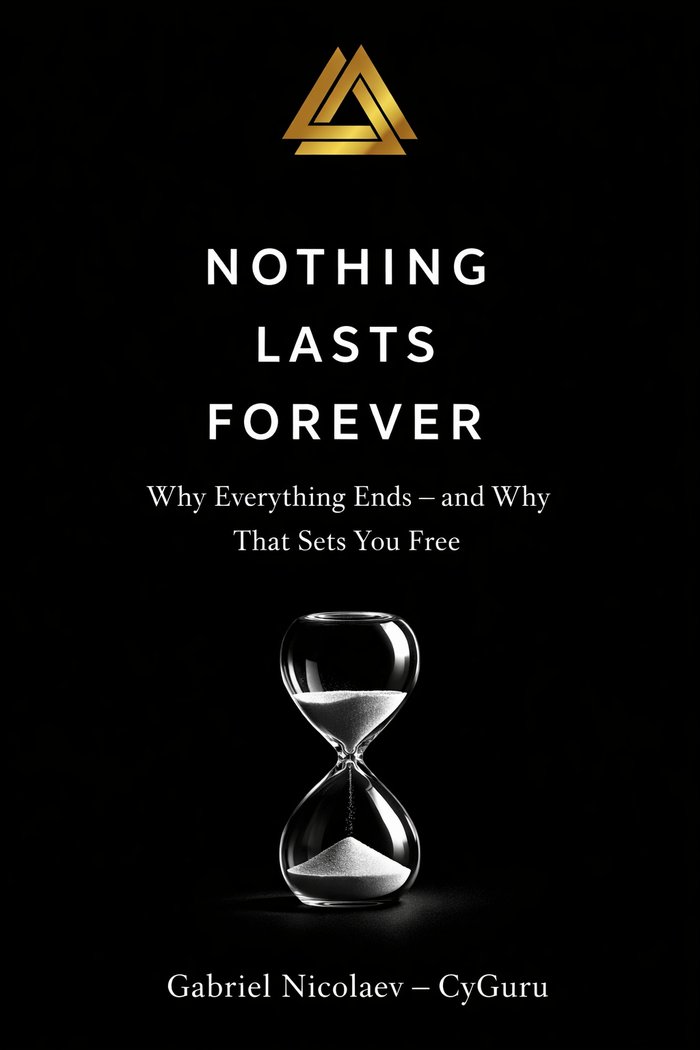
Nothing Lasts Forever
Impermanence can be understood intellectually long before it is accepted in a particular part of life. This title invites reflection on attachment, endings and the way a changing circumstance can expose an expectation of permanence.
View & order on CYGURU.com ↗