
Accepting Help Without Handing Over Your Decisions
Build practical health support that strengthens your participation, with clear roles for companions, information and decisions.

IN THIS ARTICLE
Support should increase your room to participateName the task before assigning the roleA companion can support recall without becoming the speakerDo not turn independence into a test of worthA practical case: the helpful relative who answers firstKeep consent specific enough to remain meaningfulReview whether the help increases understanding or dependenceAuthority can include choosing the form of supportSupport should increase your room to participate
Someone offers to accompany you to a health appointment, organize a difficult task or help explain a plan. You need assistance and still hesitate. Accepting can feel like admitting that you are no longer the authority in your own life. Alternatively, you may welcome help so quickly that another person starts making choices you never consciously delegated. In the CyGuru perspective, both reactions deserve examination. Agency does not mean doing everything alone, and assistance does not automatically transfer ownership of your decisions. The question is what the support enables, what authority it actually requires and whether the arrangement leaves you more able to understand and participate. A useful helper makes your role clearer rather than quietly occupying it.
Name the task before assigning the role
Help can mean transport, note-taking, company, translation, practical reminders or discussion of options. These tasks involve different kinds of access and responsibility. If you simply ask someone to handle everything, neither of you may know where the arrangement ends. Start with the specific difficulty. Perhaps you remember the conversation poorly when anxious. Perhaps you cannot manage transport comfortably. Perhaps you want someone present while you ask difficult questions. You can request that assistance without inviting a companion to answer every question on your behalf. This clarity is not a rejection of care. It protects the relationship from expectations that appear only after one person believes they have been authorized and the other feels displaced.
A companion can support recall without becoming the speaker
The National Institute on Aging suggests considering a trusted companion for a medical visit and explaining what you want from their presence. Apply that principle before the appointment. Ask whether they can record key points, remind you of a concern or help check your understanding afterward. Tell them when you would prefer to speak first and whether any part of the conversation should remain private. Clinical circumstances and local procedures may affect how a companion participates, so discuss relevant needs with the care team. The important distinction is that support should follow an understood role. Being anxious, tired or unwell does not automatically mean a person has surrendered the right to be addressed directly.
Do not turn independence into a test of worth
Refusing every offer can preserve an image of strength while making necessary care more difficult. Ask whether the refusal protects a meaningful boundary or mainly protects you from feeling seen in a vulnerable position. The answer may contain both. You are allowed to prefer privacy, choose a different helper or decline assistance that carries conditions you do not accept. But you need not prove your competence by overcoming every practical obstacle without company. NIMH includes supportive connection among ways people can care for mental health. That general principle does not prescribe a particular companion or arrangement. It gives room to consider assistance as a resource, rather than treating any reliance on another person as evidence of personal failure.
A practical case: the helpful relative who answers first
Imagine an adult bringing a relative to an appointment because they want help remembering information. The relative becomes concerned and starts answering questions before the patient can respond. The intention may be caring, but the effect is that the person whose health is being discussed becomes less involved. A brief intervention can restore the role: I would like to explain what I have noticed first; please help me add anything I miss afterward. Before the next visit, they can agree that the relative takes notes and raises an additional concern at an appropriate point. If the relative has relevant observations, those can still matter without replacing the patient’s account. This example is not a rule for every clinical situation. It demonstrates how assistance can drift into authority when its purpose is not explicit. The repair need not involve accusing the helper of wanting control. It can begin by restoring the task that was actually requested and making clear which participation remains essential to the person receiving care.
Keep consent specific enough to remain meaningful
Permission to attend one appointment is not permission to receive every future update, manage all communication or share private details with others. Discuss what information may be shared and with whom. Ask the care team about appropriate ways to record preferences or authorize access where necessary. Legal and clinical requirements vary, so do not rely on a general article to determine another person’s formal authority. The nervous-system lens adds an interpersonal question: are you agreeing because the arrangement helps you, or because refusing feels ungrateful? Gratitude and consent should remain distinguishable. You can appreciate someone’s effort while declining a particular kind of involvement, just as a helper can care deeply without being entitled to all available information.
Review whether the help increases understanding or dependence
After the task, ask what became easier and what remains unclear. Can you describe the next step in your own words? Do you know where the relevant information is? Has the helper made it easier to contact the appropriate professional, or become the only person who holds the account of what happened? Dependence is not always avoidable, and some people need extensive or continuing assistance. The objective is not an arbitrary standard of total independence. It is participation at the level appropriate to the person and circumstances, without unnecessary exclusion. If an arrangement consistently leaves you confused or unable to ask questions, revise it. More help is not automatically better help when the added activity reduces your access to the decisions that concern you.
Authority can include choosing the form of support
The deeper Human Codes question is whether care expands your capacity to remain present to reality. Sometimes that means accepting transport, a written reminder or another person’s steady company. Sometimes it means asking them to step back so that you can speak. These are compatible expressions of agency. Do not use the doctrine to assume that a person who wants assistance is weak, or that a person who declines it must be defending against connection. Look at the practical arrangement and its consequences. Good support can be revised, explained and limited without threatening the relationship. It allows the recipient to remain a person with preferences and a voice, even when they need substantial help. Accepting care becomes less frightening when accepting does not require disappearing from the decisions it is meant to support.
Continue the reading path
- The Nicolaev Medicine Manual: Which part of a health framework is an observation, an interpretation or a proposed intervention?
- The Code of Self-Healing: Which aspects of recovery can you influence, and which require help beyond yourself?
Sources and further reading
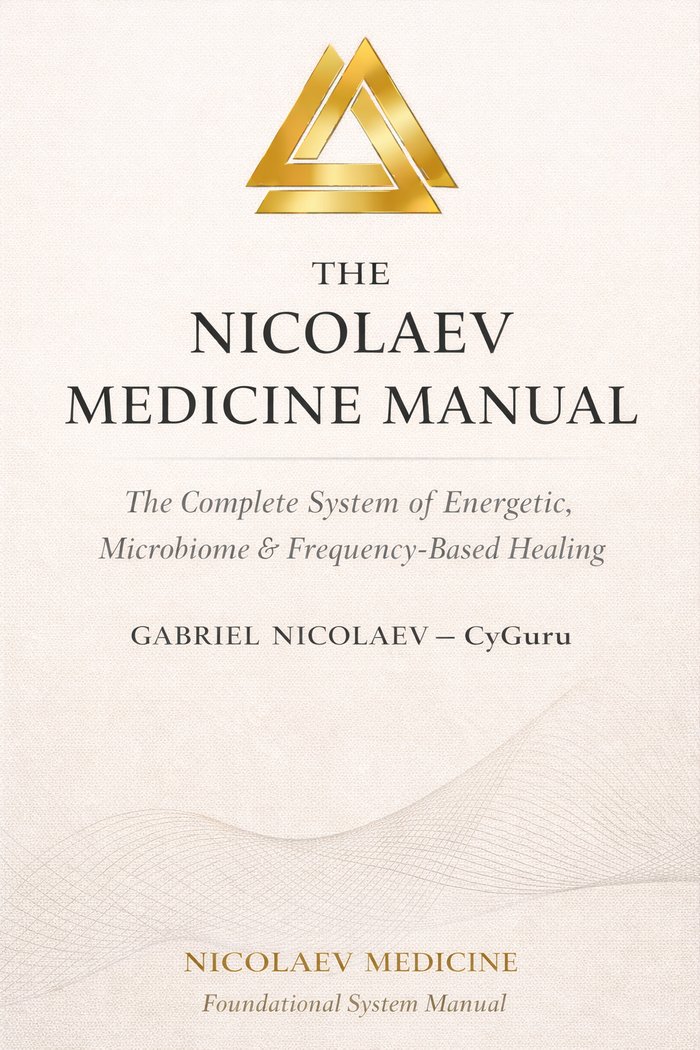
The Nicolaev Medicine Manual
A named health philosophy deserves to be examined on its own terms and against reliable evidence. This manual is the natural entry point for readers seeking to understand what the author means by Nicolaev Medicine.
View & order on CYGURU.com ↗