
The Microbiome, Food and the Gut–Brain Conversation: A Careful Reading Guide
Explore microbiome research, food habits and the gut–brain axis while separating established findings, emerging questions and claims that outrun the evidence.
IN THIS ARTICLE
An interconnected body still needs precise explanationsThe gut–brain question is not a shortcut to diagnosisFood habits deserve more than moral labelsProbiotic claims must stay specificDo not turn fasting into a rule about human worthCancer and autoimmune disease require a higher standardWhere Nicolaev Medicine fits in the readingAn interconnected body still needs precise explanations
The appeal of a systems perspective is easy to understand. Digestion, bodily experience, daily routines and emotional life are not lived as unrelated compartments. A person wants an explanation that recognizes the whole situation rather than treating each concern as an isolated event. The challenge is to preserve that breadth without replacing careful evidence with one explanation for everything.
The microbiome is a legitimate research subject. NIDDK describes research into intestinal microorganisms, diet, metabolism, immune interactions and the gut–brain axis. That breadth indicates an active field of investigation; it does not establish that one microbial imbalance explains a particular person’s symptoms or that restoring an assumed balance treats every disease.
The gut–brain question is not a shortcut to diagnosis
A connection between two systems raises further questions: which pathway, under which conditions, with what effect and supported by what type of evidence? A finding in a laboratory, an association observed in a group and a demonstrated treatment effect in patients are different achievements.
When a headline says bacteria influence mood, ask what was actually measured. A broad statement may be based on a narrow experiment or may concern a possibility still being investigated. A reading habit that notices these distinctions can preserve interest in the subject without letting enthusiasm decide the clinical conclusion in advance.
Food habits deserve more than moral labels
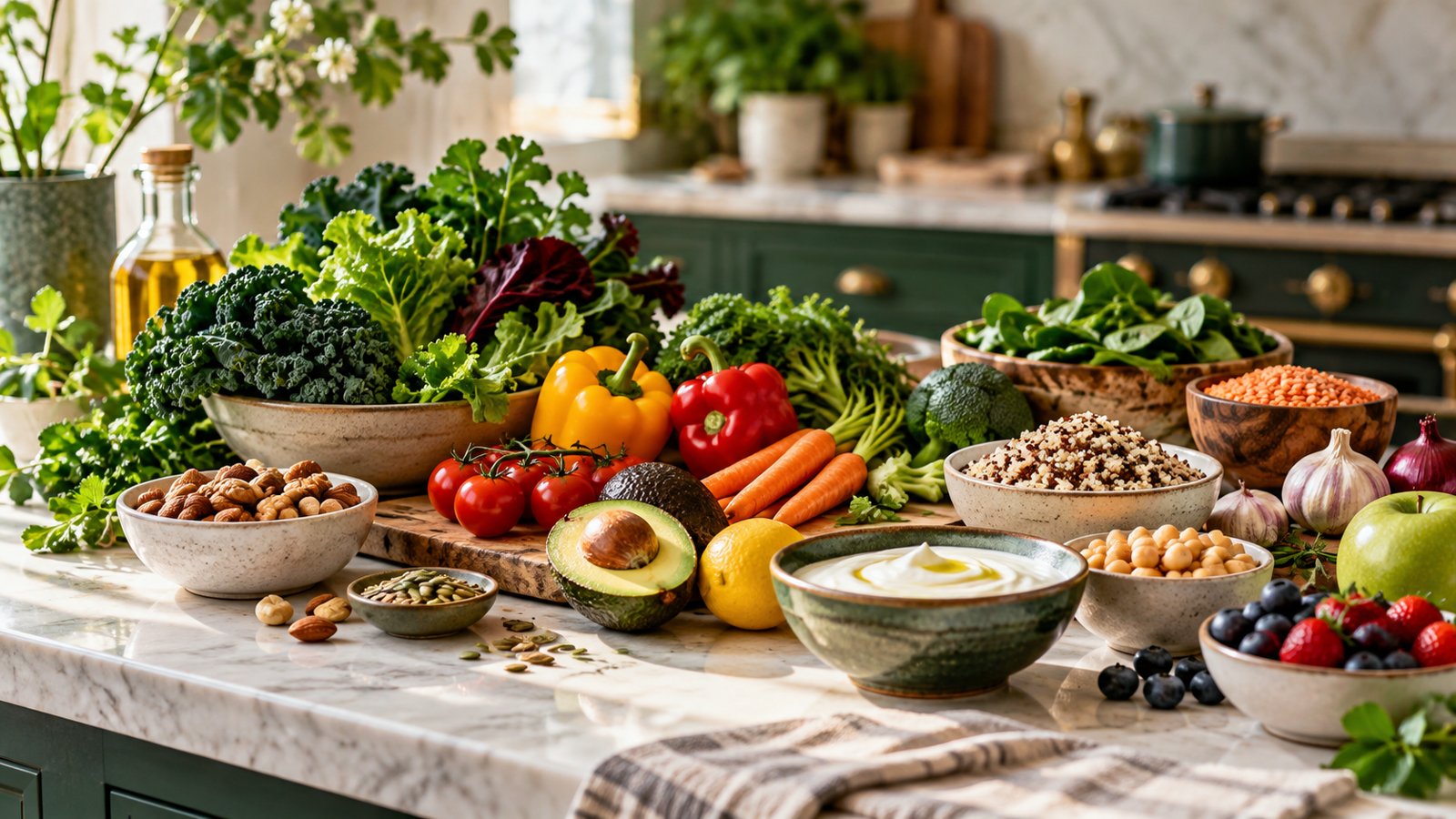
The Eating Code introduces a useful area for reflection: how food choices are organized in everyday life. Availability, routine, preferences, time and health needs all shape what a person eats. Calling a food virtuous or destructive can obscure the actual pattern, including amount, frequency and the wider context of a diet.
A practical reading question is what the ordinary routine makes easy. Are meals regularly improvised under pressure? Are decisions based on a sustainable arrangement or on rules that become impossible to maintain? Those questions can help describe behavior without claiming that a single eating pattern is appropriate for every person.
Probiotic claims must stay specific
NCCIH notes that probiotic effects can differ between organisms and that evidence and safety depend on the context. It also identifies uncertainty about many proposed uses and the need for particular care in people with serious underlying illness. This supports a specific approach to claims: which product, which condition, which evidence and which individual risk?
The phrase “restore the microbiome” is too broad to answer those questions. A commercial test, a supplement label or a convincing account of someone else’s experience does not establish the right intervention for another person. General education should make a clinical conversation more informed rather than substitute for it.
Do not turn fasting into a rule about human worth
A story about irregular food access in human history does not prove that a modern individual should avoid eating every day. An evolutionary narrative, a metabolic hypothesis and an appropriate eating plan are separate matters. Pregnancy, illness, medications and a history of disordered eating can make generalized advice especially unsuitable.
This article does not provide a fasting regimen. Its purpose is to show how a broad claim should be evaluated before being acted upon: what outcome is proposed, what evidence supports it, what risks matter and who is qualified to assess the individual situation.
Cancer and autoimmune disease require a higher standard
Research into microorganisms and disease should not be converted into a promise that changing the microbiome cures cancer or replaces treatment for an autoimmune condition. The existence of an interesting mechanism is not equivalent to a proven therapy, and a person’s outcome cannot be responsibly reduced to their success or failure at following a philosophy.
The same distinction applies to suggestions that emotional regulation controls tumor biology in a way that establishes a treatment. Individual medical decisions belong with qualified clinicians and the relevant clinical evidence. Supportive routines can be discussed without making someone responsible for controlling processes beyond their influence.
Where Nicolaev Medicine fits in the reading
The Nicolaev Medicine Manual introduces the author’s framework. Read it to understand its vocabulary and proposed relationships, then distinguish those interpretations from established findings and tested interventions. Cancer & Systemic Dysregulation and The Code of Self-Healing raise related questions that deserve the same critical standard.
A connected reading path can be valuable precisely because it creates more exact questions. It should leave you better able to describe a concern, identify the claim being made and seek the appropriate source of help. Curiosity and scientific caution support one another when neither is used to silence the other.
Continue the reading path
- The Eating Code: What does your ordinary eating routine make convenient, and what does it make difficult?
- The Nicolaev Medicine Manual: Which part of a health framework is an observation, an interpretation or a proposed intervention?
- Cancer & Systemic Dysregulation: Which statements describe a hypothesis and which are supported clinical conclusions?
- The Code of Self-Healing: Which aspects of recovery can you influence, and which require help beyond yourself?