
The Sketch Is Unfinished. You Can Still Spend an Hour With It.
Return to an old creative sketch with a bounded question, distinguish exploration from a promise to finish, and let earlier work inform the present without commanding it.

IN THIS ARTICLE
The page has survived the abandoned planSeparate the artifact from the old announcementChoose one question that fits the available timeAllow preliminary work to have its own valueConsider the room that no longer belongs in the storyWatch for the test of your own seriousnessKeep the new marks distinct from the old intentionEnd the hour without inventing the next obligationThe page has survived the abandoned plan
You open a drawer and find a sketch from a project you stopped pursuing. There is something alive in it: a shape, a character, a composition you still want to examine. Almost immediately, curiosity becomes a demand. If you pick it up again, must you finish the entire project this time? The demand can make the drawer easier to close than the page is to explore. Begin with a smaller distinction. Returning to a piece of work does not automatically renew every promise once attached to it. You can spend an hour with one question without reopening the full enterprise. The Human Codes perspective concerns the agreement you make with your present attention. An unfinished page is available material. It need not arrive carrying authority over the next year of your life.
Separate the artifact from the old announcement
Perhaps you once told people that this would become a collection, a business or a completed manuscript. Those words may still influence how the sketch feels. Look at what is actually on the page before considering the audience that heard the plan. What interests you now? Is it a technical problem, a remembered atmosphere or simply the pleasure of making another mark? An earlier announcement may require an honest update in some circumstances, but it does not change the physical question the work presents. Avoid demanding that the sketch justify the confidence of the person who began it. That person had different information and circumstances. You can acknowledge the distance without mocking the old ambition or forcing the present work to vindicate it.
Choose one question that fits the available time
Instead of promising completion, decide what you want to investigate in a bounded session. You might try another arrangement of shapes, rewrite one exchange or test whether a color changes the mood. The question should be small enough that you can recognize what you attempted. This does not guarantee a satisfying result or create a universally effective creative method. It gives the session a workable purpose. If only forty minutes are available, let that fact shape the experiment rather than treating it as evidence that meaningful work is impossible. A short return can reveal that the idea no longer interests you. That too is useful information. The session serves exploration when it allows a real answer, including an answer that does not support continuing.
Allow preliminary work to have its own value
The V&A's drawing collection includes preparatory studies and work serving different practical and artistic functions. Its institutional account is a reminder that a drawing need not be a finished public artwork to have an intelligible purpose. This is an observation about the collection, not evidence that revisiting your sketch will improve mental health or creative performance. Ask what function this particular page might have now. It could preserve an observation, help solve a detail or become material for a different piece. You do not have to elevate every fragment into a treasure. You can simply resist the assumption that unfinished means useless. A study may have done something worthwhile even when the larger work it once supported was never completed.
Consider the room that no longer belongs in the story
Imagine an illustrator who abandoned a long story but still likes the drawing of one room. Instead of restarting the whole narrative, they spend an afternoon studying how afternoon light falls across the furniture. The new work may remain a private exercise or become part of something unrelated. Nothing in the example promises publication or recovery of the original ambition. It shows how the material can be separated from an all-or-nothing contract. The room remains interesting even if the story does not. You can respond to what is present without pretending that everything attached to it must return. This is a practical form of respect for earlier effort: use what remains useful, while allowing the rest to belong to the period in which it was made.
Watch for the test of your own seriousness
A small return may provoke the thought that a serious person would either finish everything or leave it permanently alone. Ask where that rule came from and what it helps you do. In CyGuru's nervous-system doctrine, this becomes an interpretive question about identity and response: is the rule protecting your work or protecting an image of consistency? The framework does not diagnose a psychological condition or prove a hidden neural cause for hesitation. You may have sound reasons not to continue, including competing responsibilities. The point is to examine the actual reason rather than disguising an imagined character test as artistic discipline. You can make a finite experiment seriously. The size of the promise is not the only measure of the attention you bring to it.
Keep the new marks distinct from the old intention
If preserving the original matters, make a suitable copy or work on another page before changing it. Record a brief date or note so you can distinguish the earlier study from the current exploration. Respect ownership and confidentiality when the material came from collaborative or paid work; access to a file does not automatically settle permission to reuse it. These practical conditions help keep the return honest. They also prevent nostalgia from becoming a reason to ignore present obligations. You do not need elaborate archiving for every casual doodle. Use enough care for the material and circumstances involved. The useful distinction is between learning from an old piece and acting as if the context in which it was created has ceased to matter.
End the hour without inventing the next obligation
When the session ends, note what you discovered and decide whether another session is wanted. Continuing, pausing and setting it aside again are all possible outcomes. Avoid turning one enjoyable hour into a public relaunch before you know what you want from the work. Equally, do not dismiss the hour because it did not produce a finished object. In the Human Codes reading, agency includes allowing an activity to have a bounded purpose and an honest ending. You found something worth examining and gave it attention within the life you have now. The sketch may remain unfinished. Your encounter with it can still be complete enough to understand: this question was explored, this possibility remains, and the next commitment has not been made merely because the drawer was opened.
Continue the reading path
- The Life Code of CYGURU: Which principle would change a decision you are making this week?
- The Fearless Mind: What could you responsibly attempt while still feeling uncertain?
Sources and further reading
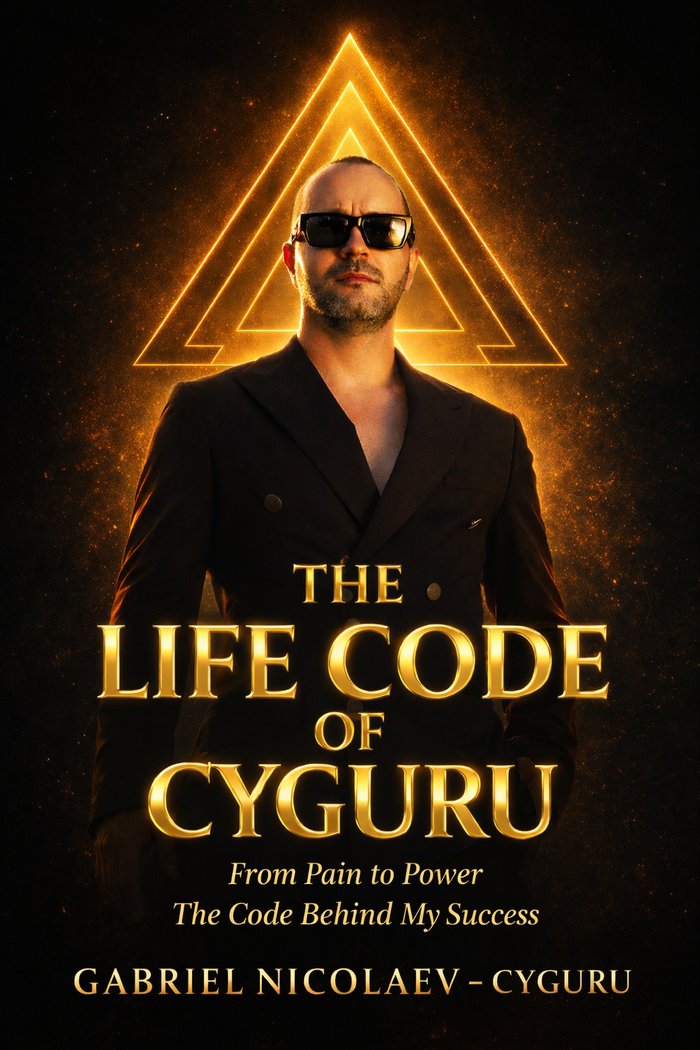
The Life Code of CYGURU
A life philosophy becomes easier to understand when its ideas are read as a connected perspective. This title offers an entry into how CyGuru frames personal direction, recurring patterns and the attempt to live by an explicit set of principles.
View & order on CYGURU.com ↗