
What You Do After Choosing Not to Trade Matters
Explore the period after a declined trade: counterfactual thinking, re-entry pressure and the records that distinguish disciplined waiting from hindsight.

IN THIS ARTICLE
A declined trade can remain open inside your attentionA good decision is judged from the information available thenSeparate a new setup from the return of regretGive waiting an operational structureGive the review a stopping ruleRecord the alternative without inventing a tradeReview patterns across enough observationsFinish the decision so the next one can beginA declined trade can remain open inside your attention
You decide the setup does not meet your plan, then watch every movement as though the trade were still yours. If price advances, the original decision starts to feel like failure. If it reverses, you feel vindicated. In both cases the market has become an audience grading the choice after the fact. The CyGuru lens examines this unfinished participation. You did not enter financially, but you may still be asking the chart to settle your sense of competence. That makes the next decision vulnerable to an argument you believe you have just lost.
A good decision is judged from the information available then
The correct question is whether the setup met the requirements when you considered it. Later movement may be useful for research, but it cannot retroactively supply information you did not have. A price move that would have been profitable does not prove entry was justified under your method. Nor does a reversal prove that your reasoning was sound. Write the reason for declining in a form that can be reviewed: a missing condition, unacceptable risk or a rule that limits participation. This record protects learning from the temptation to rewrite the original situation around the outcome.
Separate a new setup from the return of regret
After declining, you may see a genuinely different opportunity. You may also begin searching for permission to enter because the market moved without you. Distinguish the two by requiring the new setup to stand on its own documented conditions. If its main attraction is the chance to stop feeling left behind, acknowledge that motive. Urgency is not evidence that an opportunity is valid. The doctrine’s language of regulation can help you stay with an unpleasant feeling long enough to examine the facts, but it cannot tell you what the market will do next or replace a tested strategy.
Give waiting an operational structure
Decide when you will review the market again and what would make another assessment relevant. Continuous watching without a defined purpose can turn waiting into repeated temptation. A scheduled review, an appropriate alert or a change to another task may suit the method better. The exact structure depends on the strategy’s time horizon and risk controls. Avoid treating waiting as a contest to prove that you can resist looking. Its purpose is to preserve attention for a decision process. If there is no decision to make, another useful activity can have legitimate priority.
Give the review a stopping rule
A trader who spends the evening reconstructing an ideal entry after every missed move can accumulate a misleading sense of lost profit. A more disciplined review would specify which declined setups are recorded, which data are needed and when the review ends. For example, note only cases that met the predefined observation criteria, preserve the original rejection reason and assess them at a scheduled time. Do not add imagined executions to actual performance. If a possible improvement appears, formulate it as a testable change rather than a declaration that waiting was foolish. The stopping rule matters because analysis can also become a way to remain emotionally attached to a decision. Research should produce a defined question, a documented observation or a candidate for testing. If it produces only another hour of regret, change the process. This preserves room for learning while refusing the impossible task of proving that every market movement could have belonged to you. The ability to end a review is part of the authority needed to begin the next decision without carrying a fabricated account of yesterday’s perfect alternative.
Record the alternative without inventing a trade
A research journal may note that a declined setup later moved in a particular way. Label it accurately as an observation or hypothetical example. Do not add it to live results as a win, and do not assume an ideal entry, exit or execution would have occurred. Spread, slippage, timing and changing conditions can affect what a participant could actually achieve. This is where a disciplined account separates evidence from self-congratulation. Studying missed opportunities is useful when it improves a defined method; it is misleading when it produces a portfolio of imaginary profits.
Review patterns across enough observations
If the same exclusion rule repeatedly removes viable setups, investigate it through an appropriate test. Define the proposed change, the data and the costs you will consider before drawing a conclusion. If the rule protects against unacceptable exposure, favorable examples alone may not justify removing it. One memorable missed move can feel more persuasive than a balanced record because it carries regret. A careful review gives the less memorable observations a place in the decision. Neither a calm state nor a strong intuition establishes that the sample is adequate or the strategy has an edge.
Finish the decision so the next one can begin
Close the journal entry, note the next review condition and let the declined opportunity remain declined. You are not required to earn the market’s approval before returning to your day. General evidence on stress and sleep supports taking readiness seriously, but waiting remains a procedural choice rather than a biological guarantee. The deeper Human Codes question is whether you can tolerate an unclaimed possibility without turning it into an identity problem. If you can, the next order has a better chance of being evaluated for what it is, instead of being recruited to repair the last decision’s emotional aftermath.
Continue the reading path
- THE GOLD TRADER’S CODE: Which trading rules can you describe without referring to the result?
- Before You Click — Gold Trading Psychology & Nervous System Regulation: What would make you leave a convincing setup untouched?
Sources and further reading
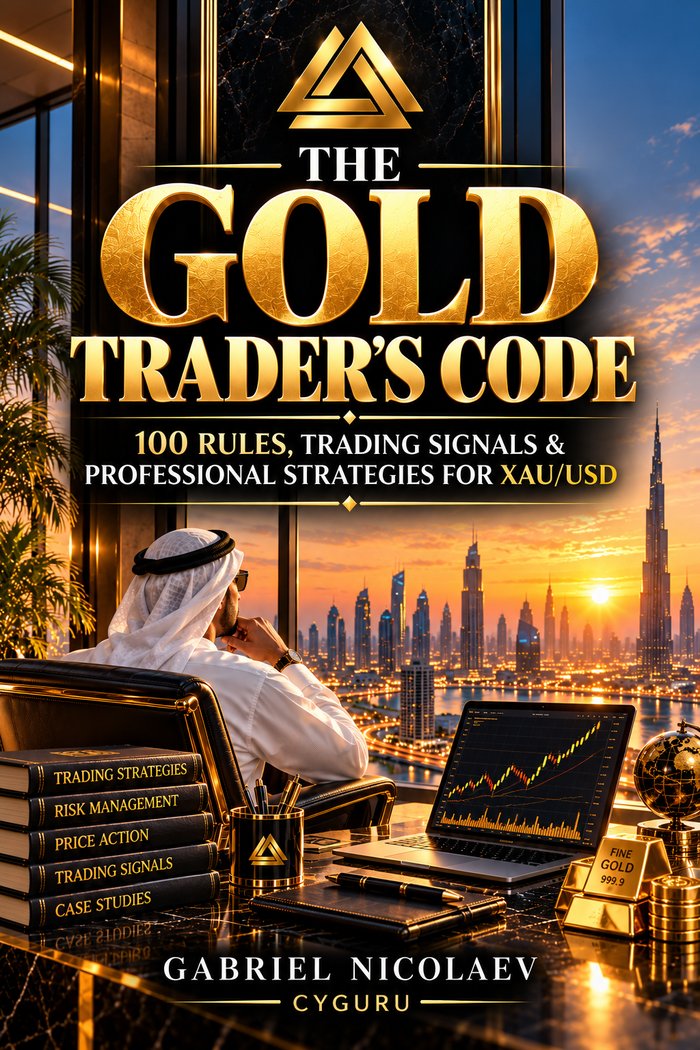
THE GOLD TRADER’S CODE
A trading rule earns its place when it changes a decision under pressure. The Gold Trader’s Code offers a starting point for thinking about the relationship between written rules, market observations and repeatable execution.
View & order on CYGURU.com ↗