
Record the Symptom. Do Not Give It Every Page of Your Day.
Keep a concise symptom record that supports clinical assessment, distinguishes observations from theories and leaves room for ordinary life.

IN THIS ARTICLE
A useful notebook can quietly become an all-day assignmentStart with the question the record should help answerDescribe what happened before naming what caused itOfficial guidance supports a specific descriptionOne ordinary day can be recorded without becoming a novelChoose recording times that fit the agreed purposeDo not wait for a complete record before seeking needed careLet the diary return to the scale of a toolA useful notebook can quietly become an all-day assignment
You begin recording discomfort so that you can explain it accurately at an appointment. Soon every small change receives a paragraph. You return to yesterday’s entry, compare sensations and add a theory about what each variation might mean. The record expands while your confidence about how to describe the problem becomes less clear. The CyGuru question concerns the job the notebook is doing. Is it preserving information that will help a clinical conversation, or has it become a place where uncertainty must be continuously negotiated? These functions can overlap, and noticing the difference does not make the symptom imaginary. Your experience deserves attention. The aim is to make that attention useful enough that recording a problem does not require handing it ownership of the whole day.
Start with the question the record should help answer
Ask your healthcare professional whether a diary would be useful and what information they would like included. The appropriate record depends on the concern and the care plan. You might need to describe when discomfort occurs, how long it lasts or which activities are affected. Avoid assuming that more information is always better. A notebook full of unrelated detail can make the relevant pattern harder to find. If you are waiting for an appointment, a concise account of the concern and its effect on daily life can provide a starting point. Follow specific monitoring instructions you have been given. This essay’s suggestions concern ordinary preparation; they do not replace prescribed measurements, urgent assessment or the clinician’s judgment about which observations matter in your particular circumstances.
Describe what happened before naming what caused it
An observation might say that discomfort began while climbing stairs and lasted several minutes. A theory might say that stress caused it. Keep those statements separate. A plausible explanation can still be incomplete or wrong, and the diary cannot establish a diagnosis merely by repeating it. Record location, timing, the way the symptom feels and any relevant context as clearly as you can. You do not need to select the most technical word. If a description is uncertain, say so. A clinician can ask follow-up questions. The Nicolaev Medicine reading values the person’s wider circumstances while respecting the need for appropriate medical assessment. A whole-person account should make competing explanations easier to examine rather than install one preferred explanation before the relevant evaluation has taken place.
Official guidance supports a specific description
NICHD’s information on describing pelvic pain suggests recording features such as location, duration, severity, whether pain comes and goes, and how it affects activities. Its context is pelvic pain, not a universal diary protocol for every condition. NIH’s broader pain overview also recognizes a person’s own account and describes a diary as one way to track symptoms over time. These sources support preparing an informative description; they do not show that keeping a diary alone treats pain or identifies its cause. Use their practical idea at the scale it supports. Your record can help communicate an experience. It is not a test of whether you are sufficiently observant, and it should not become a substitute for discussing persistent, changing or concerning symptoms with an appropriate healthcare professional.
One ordinary day can be recorded without becoming a novel
Imagine someone whose discomfort sometimes interrupts cooking. A concise entry might identify the time, where the discomfort was felt, approximately how long it lasted, what they were doing and what they stopped or changed because of it. If they followed an existing care plan, they can note that fact and the outcome without experimenting with doses on their own. The entry need not include every worry that passed through their mind afterward. Those worries can be discussed separately if they are affecting life. This example describes a communication format, not a recommendation for handling an unexplained symptom at home. The relevant point is proportion: preserve the details that distinguish the event without asking a single entry to settle the diagnosis, the future and the meaning of the entire day.
Choose recording times that fit the agreed purpose
If continuous checking is not part of your care instructions, discuss whether brief scheduled entries or notes after relevant episodes would be sufficient. The right timing cannot be prescribed universally by an article. Your circumstances and professional advice matter. Notice whether repeatedly reviewing the record produces new useful information or mainly renews the same unresolved question. The Human Codes nervous-system lens interprets this as a possible search for certainty, not as proof that monitoring caused your symptoms or that you should stop paying attention. If recording becomes distressing, tell the clinician what is happening. The record itself can be adjusted. Care should remain responsive to both the health concern and the burden of the process used to describe it, rather than treating unlimited documentation as an unquestionable duty.
Do not wait for a complete record before seeking needed care
A diary is preparation, not an entrance examination for medical attention. New severe symptoms, a significant change or another urgent concern may require prompt assessment rather than a longer period of observation. Follow the advice appropriate to your condition and local care arrangements. You are allowed to say that something is wrong even when you cannot describe every detail precisely. People may forget times, struggle with language or have difficulty separating several sensations. These limits do not cancel the experience. Bring the information you have and explain what is missing. The purpose of the record is to support communication, not to make the person prove deserving of care through perfectly organized evidence. A clinician’s assessment can include questions and examination that a notebook alone cannot provide.
Let the diary return to the scale of a tool
Before the appointment, summarize the main concern, the most useful examples, changes over time and the questions you want answered. Bring the fuller record if relevant, but allow the professional discussion to determine which details deserve attention. Afterward, ask whether continuing the diary is useful and whether its format should change. You do not have to preserve an activity indefinitely because it once seemed responsible. In CyGuru health psychology, agency includes the ability to observe without making observation your only available role. You remain a person with work, relationships, preferences and ordinary moments alongside the symptom. A useful diary gives the experience a clearer place in care. It should help you tell the story accurately while leaving other parts of your life enough space to continue being lived.
Continue the reading path
- The Nicolaev Medicine Manual: Which part of a health framework is an observation, an interpretation or a proposed intervention?
- RECHARGE: What keeps consuming capacity even during the time you call rest?
Sources and further reading
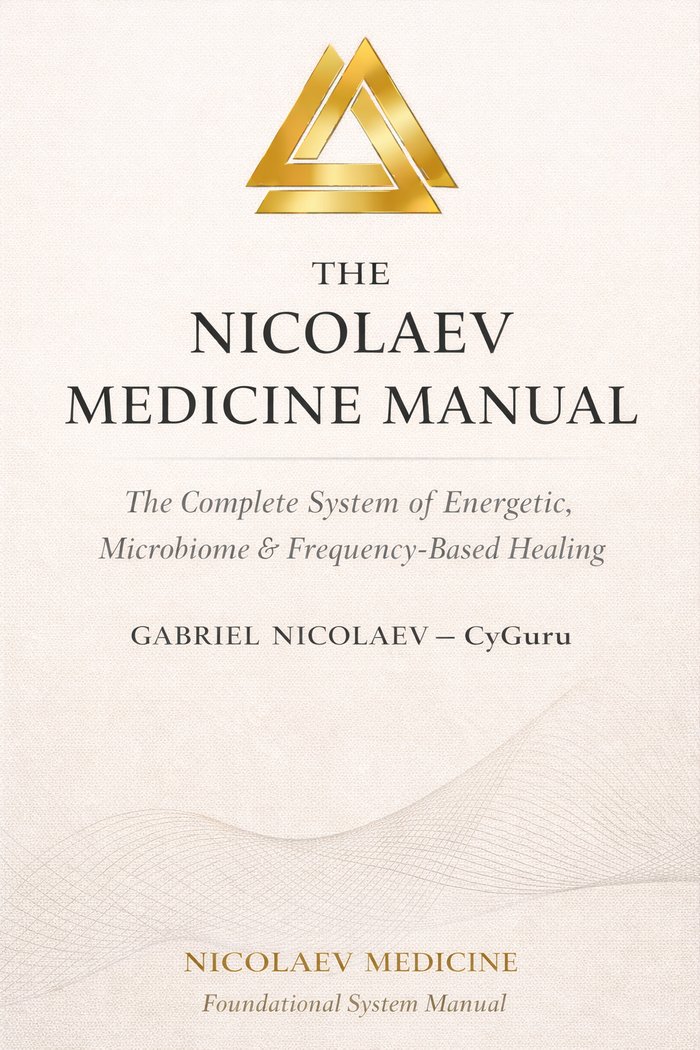
The Nicolaev Medicine Manual
A named health philosophy deserves to be examined on its own terms and against reliable evidence. This manual is the natural entry point for readers seeking to understand what the author means by Nicolaev Medicine.
View & order on CYGURU.com ↗