
The Supplement Promise Is Simple. Your Medication List Is Not.
Turn supplement marketing into specific questions about ingredients, evidence and interactions before adding another product to your routine.

IN THIS ARTICLE
The advertisement knows what relief should sound likeReplace the broad promise with an answerable questionBring the complete list rather than the favorite bottleRegulatory language needs its jurisdictionA case: three products with one repeated ingredientDo not turn uncertainty into a personal failureAgree on what would trigger reviewAn informed pause is still an actionThe advertisement knows what relief should sound like
A product promises balance, resilience or a return to your former energy. The language feels personal because the problem is personal: you are tired of uncertainty and want a clear next step. An order button supplies that step before anyone has examined your circumstances. The Human Codes perspective asks you to notice the decision being offered alongside the product. Are you choosing an intervention supported for a defined need, or purchasing a brief feeling that the problem is finally under control? That question does not mean every supplement is unnecessary. It means that a persuasive story and a suitable health decision are different achievements. Your current medicines, symptoms, medical history and goals matter more than how precisely the advertisement seems to describe your frustration.
Replace the broad promise with an answerable question
Before judging whether a product works, identify what it claims to change. Better health is too broad to evaluate. A specified nutrient deficiency, a defined symptom or a measured outcome creates a more useful discussion. Ask which ingredient, dose, formulation and population the evidence concerns. Research about one substance does not automatically establish the effects of every blend that mentions it. A laboratory finding is also different from evidence of benefit in people using the marketed product. You do not need to resolve these questions alone. Their purpose is to make a pharmacist or clinician conversation more specific. If a seller cannot clarify what evidence would count against the claim, confidence may be doing work that the evidence has not yet earned.
Bring the complete list rather than the favorite bottle
A pharmacist needs to know what you already take, including prescription medicines, nonprescription products and other supplements. Include amounts and frequency when available, and show labels or clear photographs rather than relying on a familiar brand name. Products with similar names can contain different ingredients. FDA warns that supplements can interact with medicines and that natural does not automatically mean safe. The practical implication is straightforward: evaluate the proposed addition within the whole routine, not as an isolated purchase. Do not stop or alter prescribed medication to make room for a supplement without qualified advice. A complete list may feel less exciting than discovering a new product, but it gives the professional a better basis for identifying questions the advertisement had no reason to ask.
Regulatory language needs its jurisdiction
Marketing can blur the distinction between being sold, being manufactured to a standard and being shown to treat a condition. In the United States, FDA explains that it does not approve dietary supplements for safety and effectiveness before sale in the way consumers may associate with medicines. That statement describes the US regulatory framework; other countries have their own rules. Do not generalize a package's legal status across borders or assume that availability proves suitability for you. Ask what a certification or quality claim actually covers. A check concerning identity or contamination is not automatically proof of a promised clinical benefit. Precision protects both sides of the discussion: a product may meet a particular quality standard while the evidence for a specific health claim remains limited or uncertain.
A case: three products with one repeated ingredient
A person buys a multivitamin, a sleep blend and a product marketed for stress. Because each bottle serves a different advertised purpose, they think of them as separate decisions. A pharmacist reviewing the labels notices overlapping ingredients and asks about additional medicines. The useful outcome might be a simpler plan, further clinical questions or advice against a proposed combination. The exact answer depends on the actual products and circumstances; this example supplies no dosing recommendation. It illustrates why arranging bottles by marketing category can conceal the combined exposure. Bring everything into the same conversation. Include products taken occasionally, not only those used daily. Also explain the problem you are trying to solve, because adding more ingredients is not necessarily the most informative next step for an unexplained symptom.
Do not turn uncertainty into a personal failure
When a promised result does not arrive, the sales story may suggest that you need greater consistency, another product or a stronger commitment to healing. Sometimes adherence matters to a legitimate plan, but disappointment is not evidence that your attitude caused the outcome. CyGuru's doctrine can encourage observation of habits, expectations and the desire for certainty. It should not be used to make health benefits depend on moral worth or supposedly perfect regulation. Ask whether the original goal was clear, whether evidence supported the use and whether the plan included a reasonable review point. Those questions direct attention toward an assessable decision. Blaming yourself for not believing enough protects the claim from examination while making the person who needed help carry the burden of its uncertainty.
Agree on what would trigger review
If a qualified professional recommends a supplement, ask what it is intended to achieve, how its use will be reviewed and which changes should prompt contact. Tell the professional about pregnancy, planned procedures or relevant health changes rather than assuming these details are unrelated to a nonprescription product. FDA notes that supplements can affect medicines and may matter around surgery. This is a reason for individualized discussion, not a universal timetable for starting or stopping products. If you suspect a reaction, seek appropriate medical advice; serious symptoms require urgent assessment. Keep the product name, label and timing available. A review plan turns an open-ended purchase into a decision that can be reconsidered, with the person's experience and safety remaining more important than finishing the bottle.
An informed pause is still an action
You may leave a conversation with a recommendation, a request for further assessment or a decision to buy nothing yet. None of these outcomes is inherently less proactive than placing an order. The quality of the decision depends on whether it fits a defined need, available evidence and your actual circumstances. Keep a short record of the question, the advice and the next review rather than collecting ever more confident explanations online. A health framework should make your questions clearer and your care more coordinated. It should not require a guarantee that no responsible professional can give. Before the next purchase, let the practical sequence be simple: identify the claim, gather the full medication list, ask about the relevant evidence and interactions, then choose with information that belongs to your life.
Continue the reading path
- The Nicolaev Medicine Manual: Which part of a health framework is an observation, an interpretation or a proposed intervention?
- The Eating Code: What does your ordinary eating routine make convenient, and what does it make difficult?
Sources and further reading
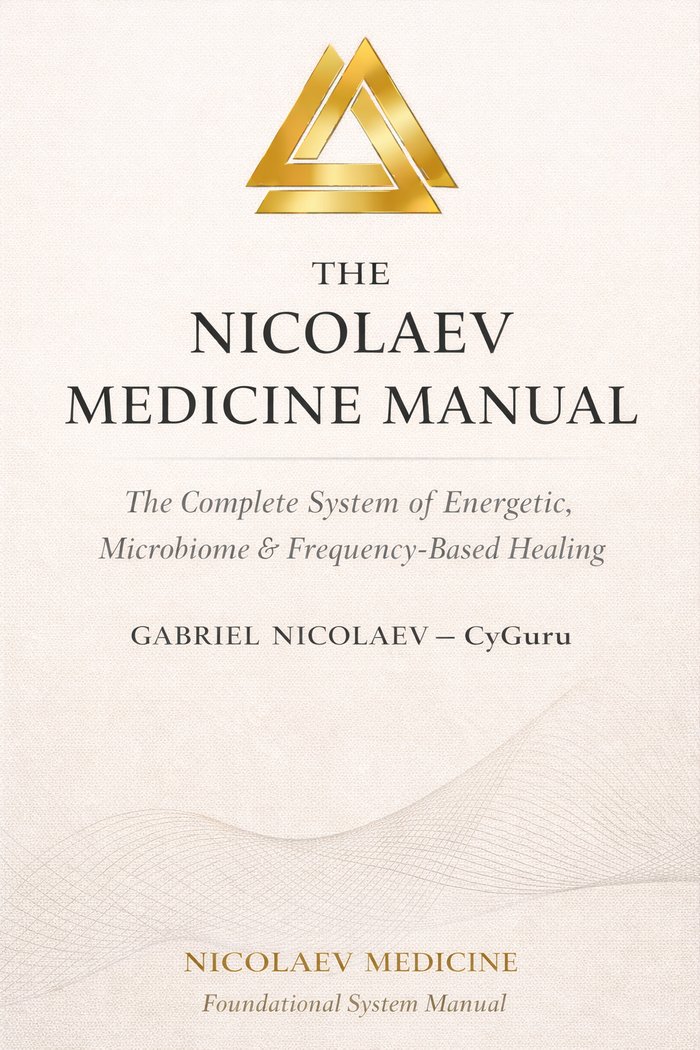
The Nicolaev Medicine Manual
A named health philosophy deserves to be examined on its own terms and against reliable evidence. This manual is the natural entry point for readers seeking to understand what the author means by Nicolaev Medicine.
View & order on CYGURU.com ↗