
Iran Conflict Analysis: Incentives, Verification and Escalation Risk
Understand Iran-related conflict through security incentives, nuclear verification, sanctions and energy exposure while separating evidence from prediction.
IN THIS ARTICLE
Analyse the confrontation without pretending to predict itBegin with the decision each actor facesNuclear verification is more precise than nuclear rhetoricSanctions change incentives through several channelsRegional influence creates both reach and exposureFollow the energy mechanism rather than the headlineSeparate escalation scenarios from predictionsInformation is an arena of influenceConvert understanding into proportionate decisionsAnalyse the confrontation without pretending to predict it
A serious reading of Iran-related conflict begins by resisting a seductive shortcut: the belief that one motive explains every action and one dramatic forecast explains the future. Security concerns, domestic politics, nuclear verification, regional partnerships, sanctions and shipping exposure interact. Their relative importance changes across decisions. An explanation that cannot accommodate conflicting incentives is usually a slogan with analytical language attached.
This essay develops a framework for reading those interactions rather than offering a live military bulletin. Its reference point is official material checked on 27 October 2026. The IAEA's chronology records a September 2026 Board resolution urging Iranian cooperation, illustrating the continuing importance of verification disputes. That specific record should not be stretched into claims about intentions, imminent operations or outcomes it does not establish. The purpose of analysis is to improve judgment under uncertainty, including the judgment to withhold a conclusion.
Begin with the decision each actor faces
States do not experience the same event in the same way. A deployment described by one government as deterrence may be interpreted by another as preparation for attack. A limited response intended to restore credibility may create pressure for further retaliation. These are analytical possibilities, not proof that any particular statement conceals a secret plan. They explain why public reassurance and escalating precautions can occur together.
For each actor, ask what it seeks to protect, what it considers intolerable and what domestic or alliance costs it faces if it appears passive. Then examine observable behaviour alongside official claims. Avoid treating a country as a single personality. Institutions, political factions and decision-makers can have different priorities. A coherent analysis identifies these constraints without claiming privileged access to private deliberations. The strongest explanation is the one that survives new evidence, not the one delivered with the greatest certainty.
Nuclear verification is more precise than nuclear rhetoric
Discussion of Iran's nuclear programme often collapses several different issues into one word: capability. Material enrichment, stockpile information, inspection access, weapon design, delivery systems and a political decision to build or use a weapon are separate questions. Evidence concerning one does not automatically settle all the others. Precision matters because a broad phrase can imply a conclusion stronger than the documented finding.
The IAEA's reporting and chronology are primary starting points for verification questions. Read the date, scope and limits of the relevant document. An inability to verify something is consequential, but it is not interchangeable with direct observation of a specific activity. Equally, a statement that a programme is peaceful does not remove the need for verification. A disciplined reader keeps the claim, the inspection evidence and the remaining uncertainty visible at the same time, rather than choosing the one most convenient to an existing political position.
Sanctions change incentives through several channels
Economic pressure can affect revenue, trade, investment and the cost of obtaining finance. Its political effects are less mechanical. Pressure may encourage negotiation, adaptation, internal repression or greater reliance on alternative networks. Which outcome becomes more likely depends on institutions, resources and the choices of the people involved. Hardship alone does not prove that escalation or compromise must follow.
When assessing sanctions, separate the legal measure from its practical effects and the political objective attached to it. Which transactions are restricted? How is enforcement operating? Who bears the cost? Who finds a way to pass that cost onward? These questions reveal more than a general statement that an economy is being squeezed. For a business, sanctions exposure requires current specialist review of counterparties and transactions. Geopolitical commentary cannot authorise a payment, resolve a prohibited dealing or substitute for the applicable legal rules.
Regional influence creates both reach and exposure
Alliances and relationships can extend a state's influence beyond its borders. They can also create uncertainty about responsibility, coordination and the limits of control. A partner's interests may overlap with those of its sponsor without being identical. It is therefore risky to assume that every action by an aligned group demonstrates one centrally controlled strategy, or that a public denial resolves the question of involvement.
A better analytical approach distinguishes verified organisational relationships, attributed responsibility and inference about intent. It also considers how rivals interpret those relationships. An actor may respond to perceived responsibility before a complete public evidentiary record exists. That gap can contribute to escalation. Describing this mechanism does not justify attacks or erase legal obligations. It identifies why a confrontation can expand even when none of the participants publicly describes uncontrolled regional war as its preferred outcome.
Follow the energy mechanism rather than the headline
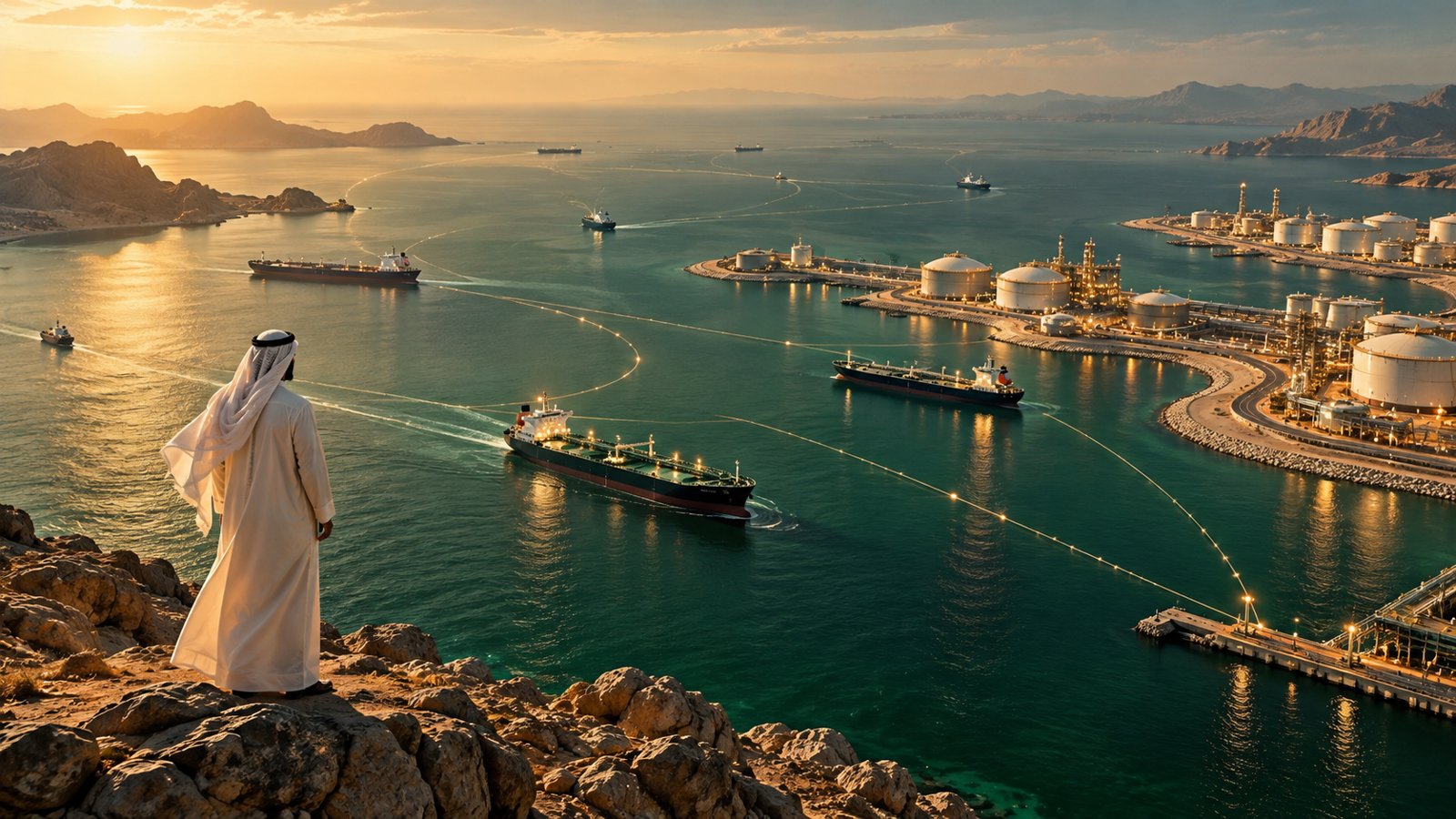
The Strait of Hormuz connects this regional security question to international energy supply. The IEA identifies the strait as a critical transit route. Exposure does not mean that every threat becomes a physical interruption, or that every price movement can be attributed to Iran alone. Traders, shipping operators, insurers and purchasers react to different parts of the risk, sometimes before barrels stop moving.
Trace the chain carefully. Concern about transport may affect freight and insurance. Buyers may seek alternative supply or larger inventories. Expectations can influence prices alongside actual flows, production decisions and demand elsewhere. These mechanisms can raise costs unevenly across sectors and countries. For a household or company, the useful question is where the exposure enters its own budget or contract. A confident forecast for the oil price is less actionable than knowing which supplier can revise terms and how quickly a business can adapt.
Separate escalation scenarios from predictions
Scenario analysis asks how a development might unfold and which observations would support that possibility. Prediction claims to know what will happen. Keep the distinction explicit. One scenario may involve continued diplomatic tension with episodic disruption. Another may involve expanding attacks and transport interruption. A third may involve a negotiated reduction in immediate risk while underlying disputes remain unresolved. None becomes the base case merely because it is easy to imagine.
For each scenario, identify signals that would change your assessment: a published agreement, verified inspection developments, actual changes in transport operations or authoritative safety instructions. Set a review point rather than watching every rumour. Avoid numerical probabilities without a defensible method. Reconsidering an assessment after new information is a sign of analytical control. Defending an outdated forecast because it has become part of one's identity turns uncertainty into a reputational contest at the expense of useful judgment.
Information is an arena of influence
Governments, armed actors, campaigners and commercial media all communicate with purposes and constraints. That does not make every statement false. It means the reader should identify what a source can know, what it is trying to achieve and how independently its claims can be checked. Dramatic footage may establish that an incident occurred while leaving its location, cause or timing unresolved.
Distinguish primary records from reporting, and reporting from commentary. Keep a small evidence log for consequential claims: source, date, factual assertion and unresolved issue. Do not launder an inference into a fact by repeating it in stronger language. Be particularly careful with casualty figures, attribution and claims that a decisive event is imminent. A narrative can feel psychologically satisfying because it offers a villain, a hidden motive and a certain ending. Satisfaction is not a method of verification, especially when actual people carry the consequences.
Convert understanding into proportionate decisions
The useful result of geopolitical analysis is a better decision within one's responsibilities. A traveller needs current official advice and confirmed transport arrangements. An importer needs to understand lead times and contractual exposure. A household needs to assess essential costs and avoid panic spending. An investor needs a risk process rather than an emotional response to a single headline. These are different tasks, and they should not be forced into one recommendation.
The Iran War: What Every Citizen Needs to Know provides a broader reading framework within the CyGuru library. Pair conceptual reading with current primary sources and professional advice where a transaction, legal duty or safety decision requires it. The discipline is to remain specific: what is established, what is inferred, what remains uncertain, and what would change the action? Geopolitical clarity is not the elimination of uncertainty. It is the ability to act proportionately without disguising uncertainty as certainty.
Continue the reading path
- The Iran War: What Every Citizen Needs to Know: What evidence would change the explanation you currently find most convincing?
- OIL, CONFLICT & THE NEW WORLD ORDER: Who depends on the resource, the route or the agreement being protected?