
You Missed the Words. A Hearing Evaluation Is Information About What Happens Next.
Prepare for a hearing evaluation with concrete examples, relevant history and communication needs, while keeping test results separate from judgments about identity or independence.

IN THIS ARTICLE
A repeated request can become a private judgmentBring examples that describe the listening situationUnderstand the roles without choosing a diagnosis in advanceProvide relevant history without constructing a theoryDo not postpone a sudden change for the scheduled testMake the appointment accessible enough to participateKeep a result separate from a verdict about independenceLeave with a next step you can describeA repeated request can become a private judgment
Someone repeats a sentence and you laugh as though you heard it the first time. You may be trying to keep the conversation moving or avoid attention. Later you remember the exchange as evidence that you are becoming difficult, old or less capable. Those meanings can arrive before the practical question has been examined. What happened, where did it happen and would a hearing evaluation help clarify it? The Human Codes approach begins with an observable difficulty rather than a complete biography built around it. This article concerns preparing for appropriate professional assessment. It cannot identify the cause of a hearing change or tell you which intervention you need. A question about hearing deserves an answer more specific than a judgment about the person asking it.
Bring examples that describe the listening situation
Notice a few concrete situations: a conversation in a busy restaurant, speech from another room, a meeting with several speakers or dialogue on television. Record what you missed and how often the problem seems to occur, without deliberately exposing yourself to loud sound or repeatedly testing your limits. NIDCD's hearing-test questionnaire asks about everyday communication difficulties and can prompt a conversation with a health professional. It is not a substitute for an evaluation or a way to diagnose yourself from a score. Your examples can help explain why you sought an appointment. They also protect the concern from becoming a vague statement that everything sounds wrong. Describe the actual circumstances in which communication becomes harder, including what helps you follow the exchange.
Understand the roles without choosing a diagnosis in advance
NIDCD describes several professionals who may help with hearing concerns, including primary care clinicians, ear, nose and throat specialists and audiologists. Their roles differ, and the appropriate route depends on the situation and local healthcare arrangements. Ask what the appointment involves, what information to bring and whether any preparation is required. Do not assume that every clinic visit supplies the same tests or that an evaluation commits you to purchasing a device. If costs, language access or referral requirements are unclear, raise those practical questions before arriving where possible. This is preparation for an informed encounter, not an instruction to select a particular service without regard to your circumstances. Knowing what the visit is meant to establish can make its limits easier to understand afterward.
Provide relevant history without constructing a theory
Follow the clinic's request for information about symptoms, timing, relevant health history, medicines and previous hearing-related care. Mention changes you noticed rather than trying to make them fit a preferred explanation. If you do not know whether a detail matters, ask. An appointment should not depend on remembering a perfect technical account. A short written note can preserve the questions you most want answered. Avoid cleaning or treating the ear in preparation unless an appropriate professional has instructed you to do so; preparation should not introduce a new problem. This article supplies no home examination protocol. The practical distinction is between bringing information that may support assessment and conducting a private diagnostic project because you feel obliged to arrive already understanding the cause.
Do not postpone a sudden change for the scheduled test
Routine preparation has an important limit. NIDCD identifies sudden deafness as a medical emergency and advises seeing a doctor immediately. A sudden loss of hearing should not be left until a convenient routine audiology appointment or attributed casually to wax, a cold or emotional pressure. Seek prompt appropriate medical assessment for a sudden change. The relevant action is timely care, not completing a notebook first. This warning does not diagnose the cause or prescribe treatment; it distinguishes a potentially urgent event from the ordinary planning described elsewhere in the article. If you are unsure about the urgency of a new or concerning symptom, obtain appropriate professional advice. An organized plan should help you reach care, not become a reason to delay asking for it.
Make the appointment accessible enough to participate
If communication is difficult, tell the service what helps you understand. You might ask that the professional face you, reduce avoidable background noise or provide key information in writing. Requirements vary, so describe your needs rather than assuming one arrangement works for everyone. If a companion attends with your agreement, clarify whether they will help remember information, provide examples or assist with practical communication. They should not automatically take over every answer. Ask the clinician to explain findings and options in language you can follow. Understanding is not measured by how rarely you request repetition. It is measured by whether you leave with an accurate account of what was assessed, what remains uncertain and what the recommended next step actually means for you.
Keep a result separate from a verdict about independence
You may fear that acknowledging a difficulty will change how others treat you. That concern can be discussed honestly without making concealment the only form of independence. In CyGuru's nervous-system doctrine, the question concerns how an anticipated identity threat shapes the response you prepare. The doctrine is an interpretive framework, not an explanation of the medical cause of hearing loss. A person can need communication support and still make informed decisions. They can also be highly confident while missing important information. Consider the specific tasks and circumstances involved rather than declaring either total incapacity or unlimited self-sufficiency. Useful support should make participation more possible. It should not require accepting every assumption another person attaches to a test result or a change they have noticed.
Leave with a next step you can describe
Before the visit ends, summarize what you understand about the findings, any recommended follow-up and how to ask further questions. If options are presented, ask about their purpose, limitations and practical requirements in your circumstances. Do not feel obliged to make an unfamiliar purchase simply to prove that you are cooperating, and do not reject every option merely to defend an old self-image. Seek the information needed for an appropriate decision. The achievement of the appointment is not a guarantee of a particular outcome. It is a more accurate basis for what follows. In the Human Codes reading, agency becomes visible when you stop asking the symptom to define your whole life and start participating in the specific assessment, conversation and care it deserves.
Continue the reading path
- The Nicolaev Medicine Manual: Which part of a health framework is an observation, an interpretation or a proposed intervention?
- The Power Of Words: Which promise has your language created that your behavior has not yet honored?
Sources and further reading
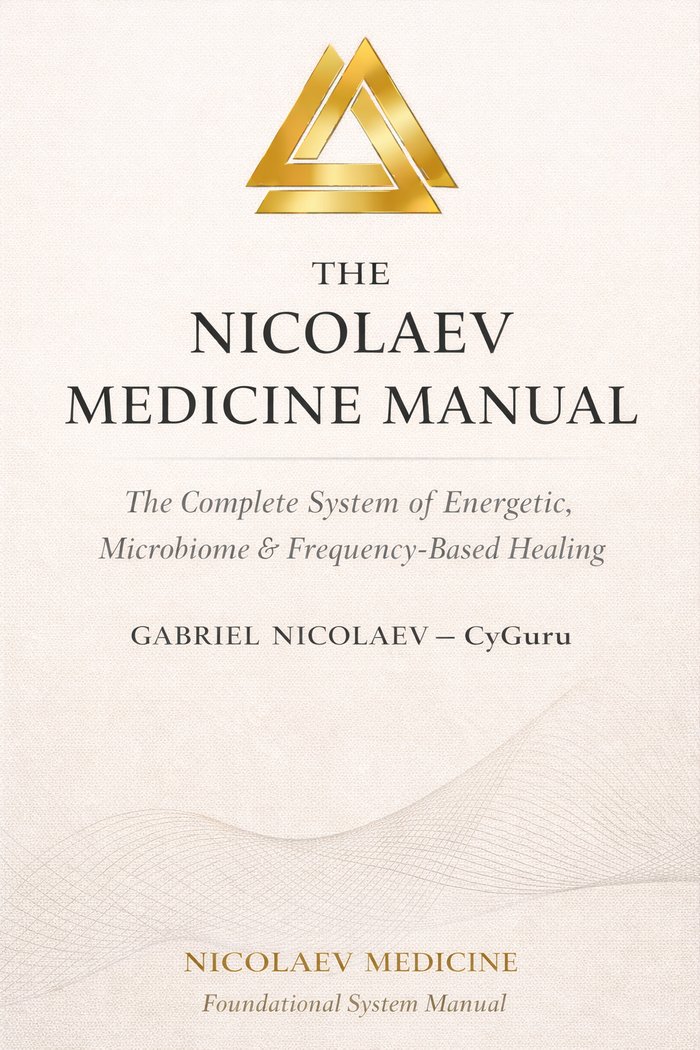
The Nicolaev Medicine Manual
A named health philosophy deserves to be examined on its own terms and against reliable evidence. This manual is the natural entry point for readers seeking to understand what the author means by Nicolaev Medicine.
View & order on CYGURU.com ↗