
A Negative Screening Result Answers a Defined Question
Understand what a negative screening result can establish, ask about follow-up and keep new symptoms visible without turning uncertainty into constant testing.

IN THIS ARTICLE
Relief arrives before the wording has been understoodScreening and investigating a symptom have different starting pointsA negative result is not the same as perfect detectionAsk about the next step before inventing oneConsider the person who lets an old report close a new questionNewer or broader does not automatically mean completeDo not make repeated testing a private ritual against uncertaintyAllow reassurance to be specific and still valuableRelief arrives before the wording has been understood
A report says the screening result is negative. You feel relief, then begin treating that relief as a promise about your entire health. The report has become larger in your mind than the question the test was designed to address. Within the CyGuru perspective, this is a moment to distinguish the information from the certainty you want it to provide. A result may be useful and reassuring in its proper context without offering an unlimited guarantee. This essay concerns general understanding, particularly of cancer screening. It does not interpret an individual's report or recommend a screening schedule. The responsible next step is to understand what was tested, what the result means in that setting and which follow-up advice applies to you. Relief does not need to be rejected for those questions to remain legitimate.
Screening and investigating a symptom have different starting points
The National Cancer Institute describes screening as looking for cancer before symptoms are present. A test used within a screening program therefore begins with a different question from an investigation of a particular new symptom. The distinction matters when a person assumes that a recent screening result has already settled an unrelated concern. Tell the clinician about symptoms and relevant changes rather than deciding that the earlier report has made them unimportant. A professional can assess how the information fits together and what, if anything, is needed next. Do not select an investigation simply because the word screening sounds less frightening or more reassuring. The purpose, timing and context of a test affect the meaning of its result. Understanding that context is more useful than treating all normal-looking reports as interchangeable certificates.
A negative result is not the same as perfect detection
NCI explains that false-negative screening results are possible: a test may appear normal even when cancer is present. That general limitation does not tell you the likelihood in your own circumstances, and it is not a reason to assume a negative report is probably wrong. Different tests and situations have different limitations. Ask the professional responsible for interpreting the result what it establishes and what it cannot exclude. Avoid importing a percentage from one test, population or article into another. The practical aim is calibrated understanding. You can accept the result as information while recognizing that medicine does not turn every uncertainty into a binary promise. A limitation becomes useful when it informs appropriate decisions; it becomes less useful when it is treated as an instruction to distrust every favorable finding.
Ask about the next step before inventing one
Useful questions include whether any follow-up is needed, when the result should next be reviewed and which changes should prompt contact. The answer may depend on the test, previous findings, age, symptoms and relevant history. This article provides no universal interval. Follow the plan agreed with a qualified professional, and seek clarification when the written advice is unclear. If a result arrives through an app without explanation, use the appropriate clinical contact rather than collecting incompatible interpretations online. You do not have to appear knowledgeable to deserve a clear answer. In a Human Codes reading, authority is strengthened when you can ask what a finding means for conduct. It is weakened when embarrassment leads you to accept a sentence you do not understand and then privately build a much larger conclusion around it.
Consider the person who lets an old report close a new question
Imagine someone who receives a negative screening result and later notices a persistent change. They hesitate to mention it because they believe the earlier result has already proved that nothing could be wrong. The appropriate response is not to diagnose the change through this example. It is to communicate the new information to a healthcare professional and allow it to be assessed in context. A new question should not be dismissed solely because a different question received a reassuring answer earlier. The opposite error is also possible: interpreting every ordinary sensation as proof the test failed. Both reactions give a general belief more authority than the available facts. Keep the observation specific, describe its timing and effect accurately, and seek the level of care appropriate to the concern.
Newer or broader does not automatically mean complete
Marketing can make a test sound comprehensive enough to replace ordinary clinical judgment. NCI's information on multi-cancer detection tests emphasizes important uncertainties and states that a negative result does not establish absence of cancer. These tests differ, and the evidence continues to develop. This is a reason to discuss a specific proposal with a qualified professional, not a blanket judgment that every new test is worthless. Do not assume a broad-sounding name means every condition, disease stage or personal concern has been assessed. Ask what is known about the particular test's intended use, benefits, limitations and subsequent steps. A technologically impressive explanation can still leave the practical question unanswered: what decision will this information support, and how will the result be interpreted alongside the rest of your care?
Do not make repeated testing a private ritual against uncertainty
After learning that false negatives exist, you may feel an urge to keep testing until doubt disappears. More investigation is not automatically more appropriate, and screening can have harms as well as benefits. Discuss that balance with a healthcare professional rather than designing a personal sequence intended to produce emotional certainty. The CyGuru nervous-system doctrine is used here as an interpretive lens on the wish for reassurance. It cannot establish that a symptom is caused by anxiety, nor can it justify dismissing a legitimate concern. If worry itself becomes persistent or disruptive, mention that too. A useful care conversation can hold both the physical question and the experience of uncertainty without forcing one to erase the other. The aim is a reasoned plan, not a promise that a person will never feel concerned again.
Allow reassurance to be specific and still valuable
A responsible understanding might be that this test did not detect the finding it was looking for, within its known limits, and that you have a defined plan for follow-up. That can be reassuring without becoming a guarantee about every future event. Keep the report available, follow relevant instructions and communicate meaningful changes rather than continually reopening the entire medical question alone. Your health is not a test of optimism, vigilance or perfect regulation. Becoming ill would not prove that you failed to interpret the result correctly or maintain the right attitude. Nicolaev Medicine is presented here as an author's whole-person perspective, while clinical claims remain answerable to evidence and qualified care. The result can have a place in that larger account without being required to supply certainty it was never designed to provide.
Continue the reading path
- The Nicolaev Medicine Manual: Which part of a health framework is an observation, an interpretation or a proposed intervention?
- DECISION: What cost are you paying to keep this choice undecided?
Sources and further reading
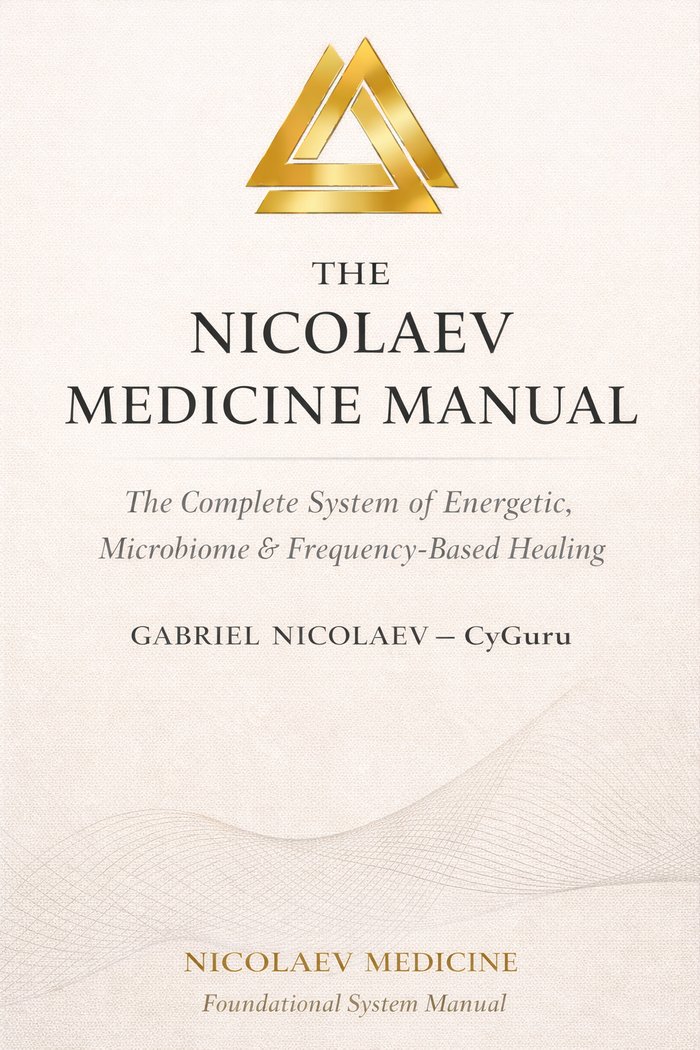
The Nicolaev Medicine Manual
A named health philosophy deserves to be examined on its own terms and against reliable evidence. This manual is the natural entry point for readers seeking to understand what the author means by Nicolaev Medicine.
View & order on CYGURU.com ↗